需要与我们合作以推广您的 GitHub 仓库或 Hugging Face 页面或产品发布或网络研讨会等吗?请与我们联系: https://forms.gle/wbash1wF6efRj8G58
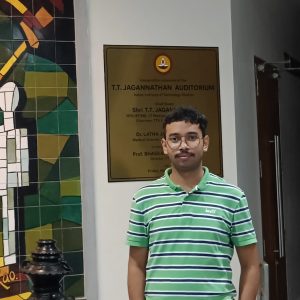
Sana Hassan 是 Marktechpost 的咨询实习生,同时也是 IIT Madras 的双学位学生,热衷于将技术和人工智能应用于解决现实世界的挑战。凭借对解决实际问题的浓厚兴趣,他为人工智能与现实解决方案的交汇带来了新的视角。
In this tutorial, we build a runnable reconstruction of the VideoAgent :https://github.com/HKUDS/VideoAgent workflow, focusing on the core agentic pipeline behind video understanding, retrieval, editing, and remaking. We start by configuring a lightweight environment that works without API keys. We define an intent parser, an agent library, a tool router, a graph planner, and a textual-gradient optimizer that repairs missing dependencies in the execution graph. We also connect these planning components to practical video-processing tools, including FFmpeg, Whisper-based transcription, scene detection, keyframe sampling, captioning, cross-modal indexing, retrieval, trimming, beat-synced editing, and final rendering. By the end of the tutorial, we have a complete multi-agent video system that can answer questions about a video, summarize its content, generate a news-style overview, and produce edited video artifacts from natural-language instructions.
We begin by configuring the VideoAgent runtime, the optional LLM backend, the working directory, the package installation flow, and lightweight dependency fallbacks. We create a shared helper layer for shell commands, pip installs, file paths, and environment detection so the notebook runs smoothly in Colab or locally. We also define a unified LLM wrapper that supports OpenAI, DeepSeek, Anthropic, and Gemini while safely falling back to deterministic execution when no API key is available.
We define the full intent space, user inputs, specialized agent registry, terminal agents, and output producers that constitute the system’s core planning vocabulary. We parse each natural-language instruction into required video capabilities such as transcription, summarization, retrieval, rendering, or beat-synced editing. We then route tools and construct an initial agent graph, either through an LLM-generated plan or a deterministic terminal-only plan that the optimizer later repairs.
We implement the graph analysis and optimization logic that checks for edges, topological order, connected components, missing inputs, intent coverage, and compatibility. We compute the structural and alignment losses using τ, κ, and χ so the system can measure whether the current graph is executable and semantically complete. We then apply textual-gradient-style repairs by inserting missing producer agents and finally execute the optimized graph via a shared blackboard of intermediate outputs.
We build the lower-level video and multimodal processing tools that extract audio, transcribe speech, detect rhythm, identify scenes, sample keyframes, and generate captions. We use FFmpeg, Whisper, CLIP-style embeddings, histogram-based scene detection, and robust fallback logic so the pipeline remains runnable even when heavier models are unavailable. We also create a cross-modal index that aligns captions, keyframes, transcript segments, and embeddings for later retrieval-based video editing.
We implement the higher-level agents that turn indexed video content into storyboard queries, retrieved scenes, trimmed clips, edited videos, summaries, answers, overviews, and final rendered outputs. We combine retrieval, cosine similarity, FFmpeg trimming, clip concatenation, beat-aware montage assembly, transcript summarization, and VideoQA into one coordinated tool layer. We then bind every implementation back into the agent registry and wrap the entire workflow inside the VideoAgent class for end-to-end execution.
We create a self-contained demo video with synthetic visuals, narration, fallback transcript timing, and predefined example instructions for QA, overview generation, highlight editing, and beat-sync editing. We provide a preview helper so produced MP4 files can be displayed directly inside Colab or Jupyter when supported. We finish with a main() function that builds the demo video, runs the selected VideoAgent demos, prints the generated artifacts, and demonstrates how to switch to our own video or an LLM-driven backend.
In conclusion, we successfully recreated the main ideas of VideoAgent as a compact, executable Colab tutorial that demonstrates how agentic planning can coordinate multiple video-understanding and editing tools. We moved from user instruction to intent analysis, routed the required tools, constructed and optimized an agent graph, and executed each node through a shared blackboard of intermediate outputs. It gives us a clear view of how complex video tasks can be decomposed into specialized agents while remaining practical enough to run in a lightweight notebook environment. We finished with a working system that not only explains and summarizes video content but also creates highlight and beat-synced edits, showing how structured multi-agent design can turn raw video input into useful multimodal outputs.
Need to partner with us for promoting your GitHub Repo OR Hugging Face Page OR Product Release OR Webinar etc.? Connect with us :https://forms.gle/wbash1wF6efRj8G58
Sana Hassan, a consulting intern at Marktechpost and dual-degree student at IIT Madras, is passionate about applying technology and AI to address real-world challenges. With a keen interest in solving practical problems, he brings a fresh perspective to the intersection of AI and real-life solutions.

 扫码直达文章详情