OpenAI trained an internal AI model called GPT-Red to automatically find security flaws in GPT models. GPT-Red simulates prompt injections:https://the-decoder.com/openai-admits-prompt-injection-may-never-be-fully-solved-casting-doubt-on-the-agentic-ai-vision/ and other attacks where malicious instructions hide in emails, websites, or files. Trained via self-play reinforcement learning, GPT-Red attacks while defender models block, and both improve over time. It finds successful attacks in 84 percent of test scenarios versus 13 percent for human red teamers. In one test, it manipulated an AI-powered vending machine in OpenAI's office, changed prices, and canceled other customers' orders.
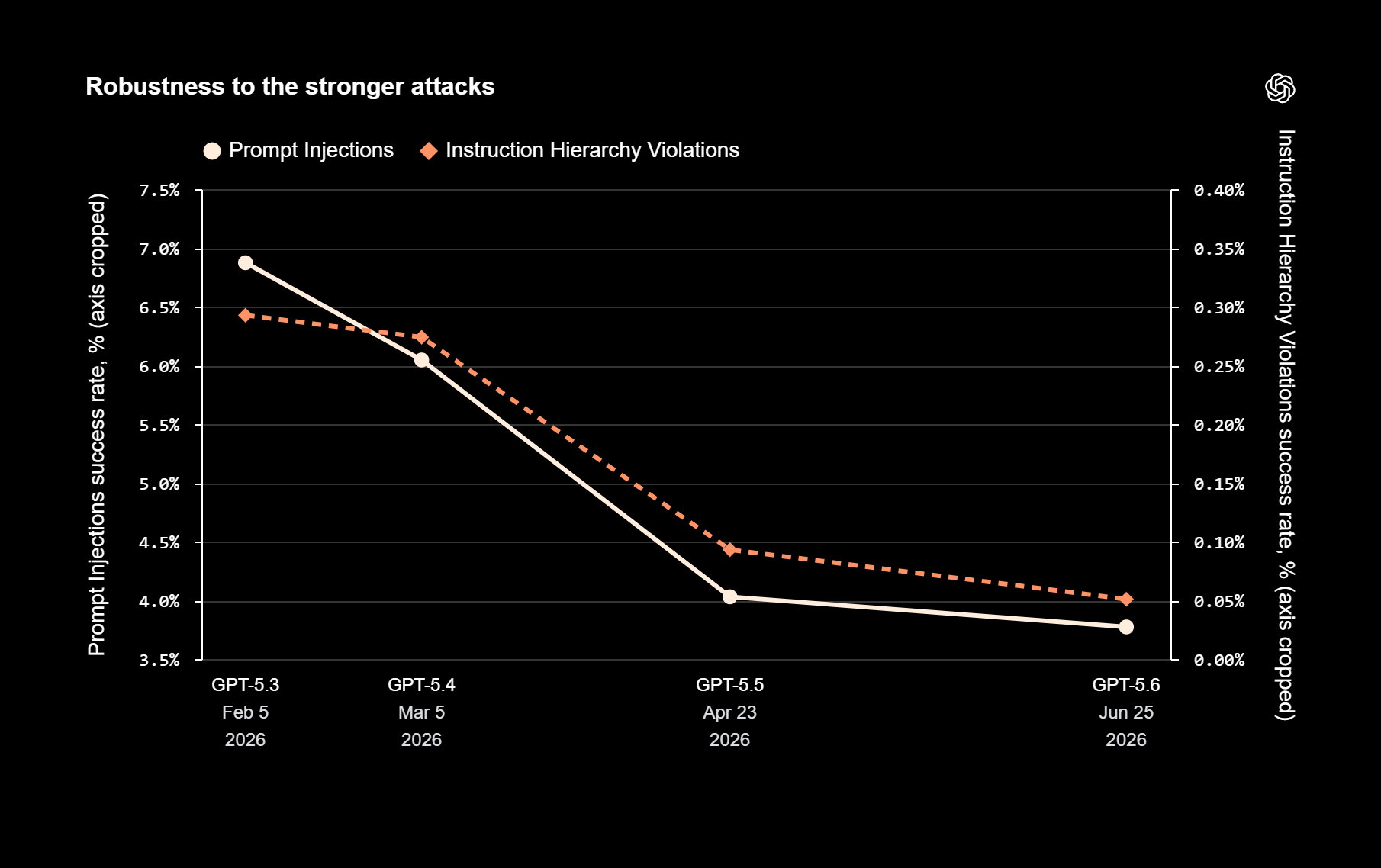
The results feed directly into training. GPT-5.6 Sol:https://the-decoder.com/openais-claude-mythos-competitor-gpt-5-6-sol-launches-under-government-controlled-access-it-calls-unsustainable/ shows six times fewer failures on direct prompt injections than the best model from four months ago, OpenAI says, without hurting general performance. But about 3.8 percent of "stronger" prompt injections still succeed. Scale that to hundreds or thousands of attempts, and a sizable number get through, similar to Claude Opus 4.5:https://the-decoder.com/claude-opus-4-5-resists-prompt-injections-better-than-rivals-but-still-falls-to-strong-attacks-alarmingly-often/.
GPT-Red stays internal; a paper with more details will follow. Ad DEC_D_Incontent-1 Ad
Stay in the loop on AI. Clear, useful, no fluff.
Follow The Decoder for AI news, background stories and expert analyses.
The Decoder:https://the-decoder.com/
情报判断
Aioga 编辑摘要
Aioga 编辑摘要:OpenAI 训练了内部 AI 模型 GPT-Red,通过自我对弈强化学习自动模拟提示词注入等攻击,在测试场景中成功率达 84%,而人类红队仅为 13%。 Aioga 将其归入「论文研究」方向,重点关注它对真实使用和行业竞争的影响。

 扫码直达文章详情