The Verge:AI(RSS)Aioga 编辑团队2026-07-21T19:22:28.000Z热度 45
Substack 推出由 AI 检测公司 Pangram 驱动的新工具,可扫描帖子、评论、笔记和回复,估算其中有多少文本可能由 AI 生成或辅助完成。读者在超过 100 字的内...
产品更新The Verge:AI(RSS)
今日 AI 情报摘要
Substack 推出由 AI 检测公司 Pangram 驱动的新工具,可扫描帖子、评论、笔记和回复,估算其中有多少文本可能由 AI 生成或辅助完成。
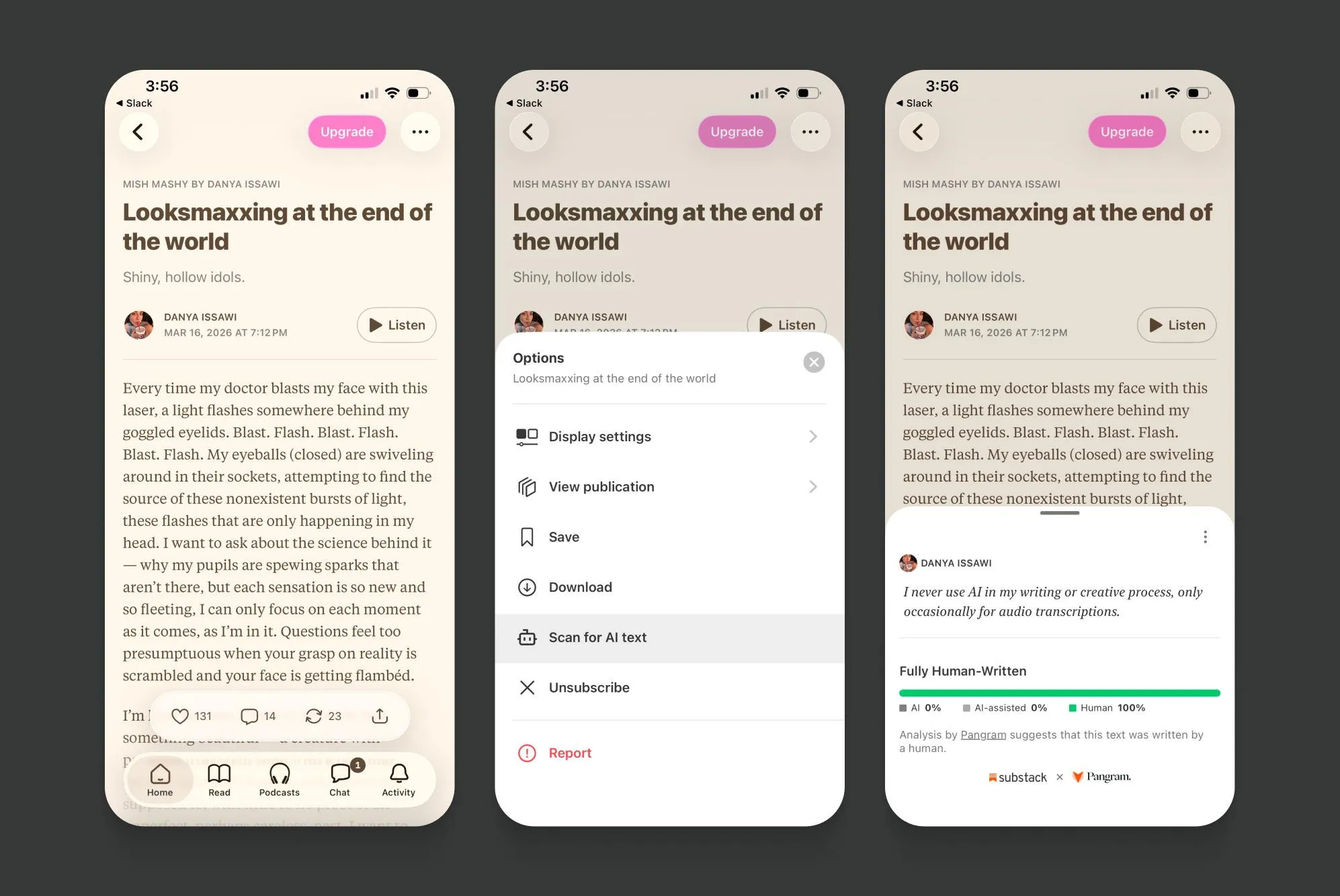
读者在超过 100 字的内容右上角菜单中选择"Scan for AI text"即可使用。 Substack 同时允许创作者添加"How I make this"声明说明写作过程,并可扫描草稿及报告不准确结果。
中文正文 · AI 翻译
Substack 现在将帮助用户判断他们正在阅读的内容是否可能由 AI 撰写。据周二发布的一篇博客文章介绍,一个即将上线的平台新工具可以扫描帖子、笔记、回复和评论,以提供文本中可能由 AI 生成或在 AI 辅助下撰写的比例估算:https://post.substack.com/p/against-claudefishing。
该工具由一家名为 Pangram 的 AI 检测公司提供技术支持:http://pangram.com,并正在向网络端和 iOS 应用推出,Android 版本“即将上线”。读者可以通过在帖子右上角的三点菜单中选择“扫描 AI 文本”选项来分析内容长度超过 100 字的文本。
Substack 联合创始人兼 CEO Chris Best 表示,Pangram 的整合旨在随着 AI 的普及提高平台透明度:https://www.socialmediatoday.com/news/can-social-media-platforms-survive-the-flood-of-ai-content/824914/。“核心问题不在于人们是否使用 AI,或者其输出质量如何,”Best 写道,“问题在于当读者的期望与现实不符时,尤其是当他们无意中将注意力投注于没有任何人类思考的内容时。这就是 Claudefishing。”
Best 指出,“Pangram 只能检测文本是否使用了 AI,而无法判断文本是否经过细致的人类用心创作,也无法判断是否将 AI 工具用作参考来源。”但 Best 表示,这一目标是让人们更容易决定是否投入时间阅读博客文章。“当读者不得不怀疑自己读的内容是否真实时,这会削弱对作者的信任,并威胁到作家们的生计——包括那些经过深思熟虑、使用 AI 工具创作自己相信的作品的作家们,”Best 写道。“奖励虚假内容的平台将导致恶性竞争。”
Substack will now help users determine whether what they’re reading may have been written by AI. A new tool coming to the platform can scan posts, notes, replies, and comments to provide an estimate of how much text could be AI-generated or written with AI assistance, according to a blog post published on Tuesday:https://post.substack.com/p/against-claudefishing.
The tool is powered by an AI detection company called Pangram:http://pangram.com and is rolling out across the web and the iOS app, with an Android launch coming “soon.” Readers can analyze content longer than 100 words by choosing the “Scan for AI text” option from the three-dot menu in the top-right corner of a post.
Substack cofounder and CEO Chris Best says the Pangram integration is meant to increase transparency on the platform as AI becomes more prevalent:https://www.socialmediatoday.com/news/can-social-media-platforms-survive-the-flood-of-ai-content/824914/ on social media. “The core problem is not people using AI, or the quality of its output,” Best writes. “The problem is when there is a mismatch between a reader’s expectation and reality, especially when they unwittingly invest their attention in something with no human thought on the other end. That’s Claudefishing.”
In line with this change, Substack will also allow creators to explain their writing process to readers with a new “How I make this” statement. Writers can scan their drafts with Pangram, too, and will have an option to report inaccurate results.
Best notes that “Pangram can only detect whether AI was used to make the text, not whether great human care went into creating it, nor whether AI tools were used as a source.” But the goal, according to Best, is to make it easier for someone to choose to invest their time reading a blog post. “When readers have to wonder if what they’re reading is real, it undermines trust in authorship and threatens the livelihood of writers — including those who use AI tools thoughtfully to produce work they believe in,” Best writes. “Platforms that reward fakeness will create a race to the bottom.”
情报判断
Aioga 编辑摘要
Aioga 编辑摘要:Substack 推出由 AI 检测公司 Pangram 驱动的新工具,可扫描帖子、评论、笔记和回复,估算其中有多少文本可能由 AI 生成或辅助完成。 Aioga 将其归入「产品更新」方向,重点关注它对真实使用和行业竞争的影响。
 扫码直达文章详情