Meta 推出 AI 检测系统 Content Seal,但可用性不及 Google 的 SynthID
The Verge:AI(RSS)Aioga 编辑团队2026-07-22T11:00:00.000Z热度 61
Meta 于 7 月推出 Content Seal,为旗下 Muse 模型生成的图像添加不可见水印,但用户目前仅能通过专用网页工具检测,且不支持视频和旧模型。与 Google...
技巧观点The Verge:AI(RSS)
今日 AI 情报摘要
Meta 于 7 月推出 Content Seal,为旗下 Muse 模型生成的图像添加不可见水印,但用户目前仅能通过专用网页工具检测,且不支持视频和旧模型。
与 Google 已向 OpenAI 开放的 SynthID 相比,Content Seal 功能相似但可用性更差,Meta 也未将检测能力集成到 Meta AI 聊天机器人中。
中文正文 · AI 翻译
在三月份,Meta 的监督委员会呼吁公司: https://www.oversightboard.com/news/board-calls-for-new-rules-on-deceptive-ai-during-conflicts/ “履行其公开承诺并使用自身工具”,以帮助遏制欺骗性生成式 AI 内容在各平台上的传播。Meta 在七月份作出回应,推出了 Content Seal:https://ai.meta.com/blog/introducing-muse-image-muse-video-msl/ ——一种可以为公司新 AI 模型生成的图像打上标记的隐形水印技术。但这基本上只是公司在发布 Muse 图像和视频生成工具公告中的一个脚注。
作为一个花大量时间审查 AI 标签系统的人,Content Seal 并没有让我感到信心。已经有更成熟的解决方案,例如 C2PA 内容凭证和谷歌的 SynthID:/ai-artificial-intelligence/934521/google-synthid-c2pa-content-credentials-ai-labelling-efforts,Meta 本可以使用这些解决方案,而不是迟迟推出自己的系统。在调查 Meta 为什么推出自己的系统后,我并不认为 Meta 已经充分考虑了这一点。
根据 Meta 的描述,Content Seal 的工作方式类似于 SynthID:/2023/8/29/23849107/synthid-google-deepmind-ai-image-detector。这个对人眼不可见的水印提供了一个“隐藏来源信号”,嵌入到 AI 生成的图像中,然后可以通过检测工具进行扫描和标记,帮助在线用户区分深度伪造和真实内容。与 SynthID 类似,Meta 还表示,即便图像被“裁剪、压缩、调整大小或截图”,Content Seal 水印仍然保持完整并且可以被检测到。
那么,如果 Content Seal 在功能上与 SynthID 相同……为什么不直接采用 SynthID 呢?Meta 已经作为指导委员会成员:https://c2pa.org/ 参与了内容来源和真实性联盟(C2PA),该联盟与谷歌一起推广独立的内容凭证标准,这表明它愿意与他人合作解决日益增长的 AI 检测问题。SynthID 也已经被 OpenAI 采用,因此显然谷歌也愿意为了提高透明度向竞争 AI 提供商公开其技术。
“像其他公司一样,我们根据自己的技术规格和产品本地开发了 Content Seal。解决生态系统中的这个问题需要多种方法协同工作,我们很高兴能为这一努力做出贡献,”Eischen 说。“我们很快会有更多关于 Content Seal 的信息分享。”
鉴于 Content Seal 只能检测使用 Meta 最新 AI 模型生成的图像,我不禁要想,这家公司一直在做什么。自 2023 年以来,Meta 就提供了 AI 图像生成工具:/2023/9/27/23891128/meta-ai-assistant-characters-whatsapp-instagram-connect,因此它已经生成了大量无法被其自有系统检测出的虚假内容。Meta 还在 2023 年为 Instagram 和 Facebook 推出了 AI 标签,这一举措当时激怒了许多摄影师,因为它错误地将真实照片标注为“由 AI 制作”:/2024/6/24/24184795/meta-instagram-incorrect-made-by-ai-photo-labels。
三年过去了,Meta 仍不确定如何将自身定位为 AI 内容的制造工厂以及识别工具,尤其是在其自身平台上。即便是 Meta 的高级领导层似乎也不知道下一步该做什么。
在 Lenny Rachitsky 的播客采访中,Instagram 负责人 Adam Mosseri:/tech/963961/instagram-adam-mosseri-ai-feed-filters 最初接受了这样一个观点,即不喜欢 AI 生成内容的人应该被允许将其排除在社交动态之外——这听起来很像一种过滤功能:/ai-artificial-intelligence/942909/let-us-filter-ai-slop-google-youtube-meta-instagram-tiktok,这需要一个可靠的 AI 标签系统。他甚至表示,真实性本身将变得更加受欢迎,因为这是 AI 无法提供的。
然而,在同一次采访中,Mosseri 表示,“我认为我们不应该过滤 AI 内容”,同时确认“我们应该让你知道内容是否为 AI 内容。”Mosseri 还重申了他之前表达过的观点:/news/852124/adam-mosseri-ai-images-video-instagram,他认为对真实媒体进行指纹识别可能“比对假媒体更实际”:/tech/906453/human-made-ai-free-logo-creative-content。这并没有让 Meta 显得对自己开发可行的 AI 标记系统充满信心。在将其社交平台建成虾耶稣的混乱工厂:https://www.youtube.com/watch?v=KGfyXzQKvYI 以及其他生成型脑洞内容:/2024/4/15/24131162/ill-see-your-shrimp-jesus-and-raise-you-spaghetti-jesus-on-a-lambo 之间,它已经有足够的时间来开发,但 Content Seal 的发布仍然感觉像是匆忙推出的。
它对消费者没有提供任何相较于类似、成熟的 SynthID 系统的独特优势,反而只是又增加了一道人们必须跳过的验证 AI 内容的门槛。也许 Meta 本该像 OpenAI 那样采用 Google 的水印标准。Facebook 和 Instagram 用户或许会因此受益。Eischen 告诉我,Meta 多年来一直在贡献开源水印研究:https://engineering.fb.com/2025/11/04/video-engineering/video-invisible-watermarking-at-scale/,所以这项技术并非一夜之间产生,但我本期待它能带来更好的面向消费者的体验。
如果 Meta 想依靠自己的解决方案,它需要的不仅是一个半成品的 SynthID 克隆版来证明其对 AI 透明度的认真——至少需要一个更可靠的版本。路透社:https://www.reuters.com/business/meta-ai-image-detector-fails-identify-some-its-own-cropped-ai-images-reuters-2026-07-10/ 已经发现,Content Seal 在测试时未能检测出超过一半的 Muse 生成图像,在这些图像被裁剪之后。
IIn March, Meta’s Oversight Board called on the company:https://www.oversightboard.com/news/board-calls-for-new-rules-on-deceptive-ai-during-conflicts/ to “meet its public commitments and employ its own tools” to help quell the spread of deceptive generative AI content across platforms. Meta responded in July by introducing Content Seal:https://ai.meta.com/blog/introducing-muse-image-muse-video-msl/ — an invisible watermarking technology that flags images generated by the company’s new AI model. But it was basically a footnote buried in the company’s announcement for its Muse image and video generation tools.
As someone who spends a lot of time scrutinizing AI labeling systems, Content Seal doesn’t fill me with confidence. There are already more established solutions, like C2PA Content Credentials and Google’s SynthID:/ai-artificial-intelligence/934521/google-synthid-c2pa-content-credentials-ai-labelling-efforts, that Meta could have used instead of launching its own system significantly later. After digging around to figure out why Meta has launched its own system, I’m not convinced that Meta has thought this through.
By Meta’s description, Content Seal works similarly to SynthID:/2023/8/29/23849107/synthid-google-deepmind-ai-image-detector. The watermark, invisible to human eyes, provides a “hidden provenance signal” embedded into AI-generated images that can then be scanned and flagged by a detection tool, helping online users to differentiate deepfakes from authentic content. Like SynthID, Meta also says that Content Seal watermarks remain intact and can still be detected if the image is “cropped, compressed, resized, or screenshotted.”
So, if Content Seal functionally does the same thing… why not just adopt SynthID? Meta already operates as a steering committee member:https://c2pa.org/ of the Coalition for Content Provenance and Authenticity (C2PA) that promotes the separate Content Credentials standard alongside Google, so it’s shown willingness to work with others on solving the growing issue of AI detection. SynthID has also already been adopted by OpenAI, so clearly Google is also willing to open its technology up to rival AI providers in the name of improving transparency.
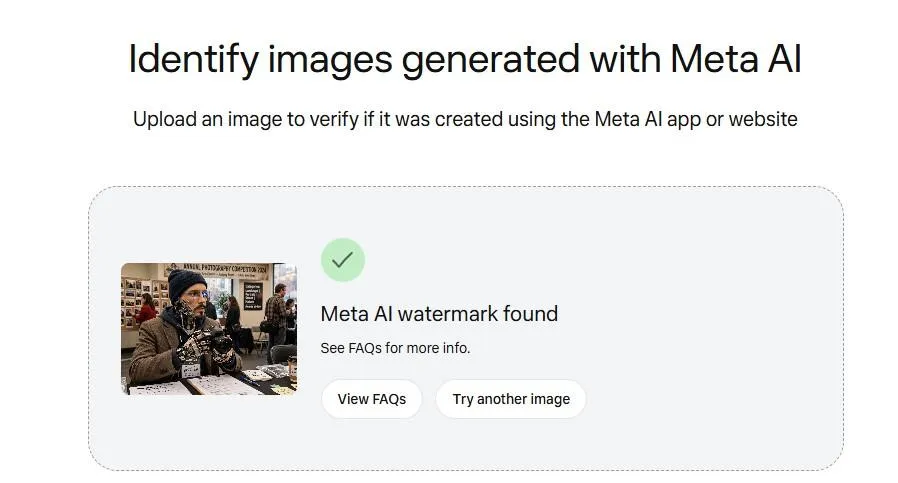
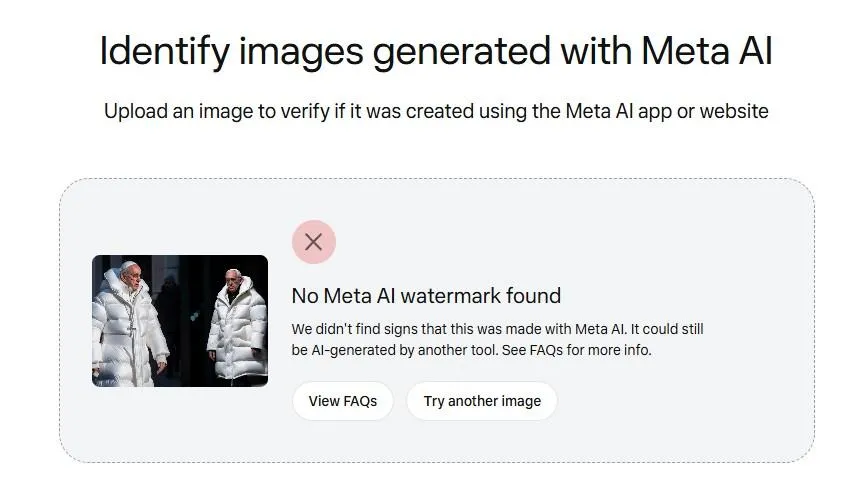
Content Seal has several limitations in its current state despite those similarities to Google’s system. For now, users can only detect Content Seal watermarks through a dedicated web tool:https://meta.ai/identification that Meta is testing, meaning Meta hasn’t built those detection capabilities into its Meta AI chatbot like Google has with Gemini:/news/824786/google-gemini-synthid-ai-image-detection. It sounds like that may be in the works, however. Meta spokesperson Faith Eischen told The Verge that the company is “exploring ways to bring detection closer to where people encounter AI-generated content.” Given that’s where AI detection is needed most, and has been for some time, why isn’t it available at launch?
The watermark itself is also only being applied to images generated by Muse in the Meta AI app and Meta.ai website, which means online users can’t use it to detect content created by Meta’s older AI models. Support for generated video isn’t available either, though Meta says this is coming “soon.”
On Meta’s own platforms like Facebook and Instagram that apply AI labels, Eischen said unspecified metadata “alongside Content Seal watermarking” is being used to help users identify AI-generated content. When I asked Meta if it was instructing other online platforms like TikTok and LinkedIn that scan and label AI content on how to detect Content Seal, Eischen said the company is “determined to work with our industry peers to make sure users have the best experience possible.”
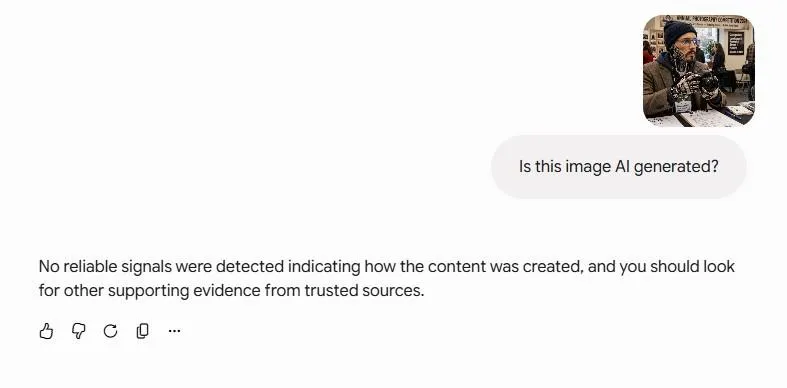
That sounds like broader support for the standard is still a work in progress, which could prevent Muse-generated images from being effectively labeled outside of Meta’s own platforms. When I fed a test image I made using Meta’s Muse model into Gemini and the official C2PA detection portal, neither tool could confirm that it was AI-generated. There’s also the question of whether Content Seal can be applied to image and video files alongside SynthID and Content Credentials without interfering with those other standards. Meta didn’t provide any clarification for this on record.
“Like others, we built Content Seal natively towards our own technical specifications and products. It takes multiple approaches working together to address this across the ecosystem, and we’re glad to be contributing to that effort,” Eischen said. “We’ll have more to share about Content Seal soon.”
Given Content Seal can only detect images generated using Meta’s very latest AI model, I have to wonder what the company has been doing all this time. Meta has provided AI image generation tools since 2023:/2023/9/27/23891128/meta-ai-assistant-characters-whatsapp-instagram-connect, so it’s already churned out a lot of fakery that can’t be detected by its own proprietary system. It also introduced AI tags to Instagram and Facebook in 2023, which angered many photographers at the time by mistakenly labeling real photographs as “Made by AI:/2024/6/24/24184795/meta-instagram-incorrect-made-by-ai-photo-labels.”
Three years on, Meta still isn’t sure about how to pitch itself as both a factory for AI content and the solution for identifying it, especially across its own platforms. Even senior leadership at Meta seems to be at a loss for what it should do next.
In an interview on Lenny Rachitsky’s podcast, Instagram head Adam Mosseri:/tech/963961/instagram-adam-mosseri-ai-feed-filters initially embraced the idea that people who dislike AI-generated content should be allowed to keep it out of their social feeds — which sounds awfully like a filtering feature:/ai-artificial-intelligence/942909/let-us-filter-ai-slop-google-youtube-meta-instagram-tiktok that would require a reliable AI labeling system. He even suggests that authenticity itself will become more desirable as something that AI can’t provide.
”In a world where there’s an abundance of synthetic content, I actually think people are going to seek out creativity and authenticity and people more, not less,” Mosseri said.
“I don’t think we should filter out AI content”
During the same interview, however, Mosseri said “I don’t think we should filter out AI content,” while affirming that “we should let you know if content is AI content or not.” Mosseri also reiterated an opinion:/news/852124/adam-mosseri-ai-images-video-instagram he’d previously expressed that it might be “more practical to fingerprint real media:/tech/906453/human-made-ai-free-logo-creative-content than fake media.” That doesn’t make Meta sound confident in its own ability to develop a viable AI labeling system. It’s had plenty of time to do so between building its social platforms into slop factories for shrimp Jesus:https://www.youtube.com/watch?v=KGfyXzQKvYI and other generative brainrot:/2024/4/15/24131162/ill-see-your-shrimp-jesus-and-raise-you-spaghetti-jesus-on-a-lambo, yet the Content Seal launch still feels like it was rushed out the door.
It offers no unique benefits for consumers over the similar, established SynthID system, and instead just creates yet another hoop that people have to jump through to verify AI content. Maybe Meta should have just adopted Google’s watermarking standard instead, like OpenAI has. Facebook and Instagram users may be better off if it had. Eischen tells me that Meta has been contributing open-source watermarking research:https://engineering.fb.com/2025/11/04/video-engineering/video-invisible-watermarking-at-scale/ for years now, so it didn’t cook this tech up overnight, but I would expect a better consumer-facing experience to show for it.
If Meta wants to stand on its own solutions instead, it’ll need more than a half-baked SynthID clone to prove it’s actually serious about AI transparency — certainly a more reliable one at least. Reuters :https://www.reuters.com/business/meta-ai-image-detector-fails-identify-some-its-own-cropped-ai-images-reuters-2026-07-10/ has already found that Content Seal failed to detect more than half of the Muse-generated images it tested after they had been cropped.
 扫码直达文章详情