NVIDIA 与 KAIST 机械工程系正计划建立 NVIDIA AI 技术中心(NVAITC),用于物理 AI 的协作研究、人才培养和知识交流——包括利用 NVIDIA Nemotron:https://www.nvidia.com/en-us/ai-data-science/foundation-models/nemotron/ 开放模型的项目。
此外,还包括 NVIDIA-KAIST 在首尔 KAIST 金在哲 AI 研究生院设立的智能体 AI 联合研究实验室:https://nvidianews.nvidia.com/news/nvidia-and-kaist-launch-joint-ai-research-lab-to-accelerate-ai-innovation-in-korea——针对韩国语言和本地产业建设,并承诺多年资金支持和培训韩国研究人员。
NVIDIA 和首尔国立大学:https://en.snu.ac.kr/snunow/snu_media/news?md=v&bbsidx=173288 也计划设立一个涵盖 AI 研究、人才培养和教育的 NVAITC——范围包括基础模型、加速计算、物理 AI 以及科学 AI,并有可能在 AI 基础设施上展开合作。这将包括利用 NVIDIA Nemotron 和 NVIDIA Cosmos:http://nvidia.com/en-us/ai/cosmos/ 开放世界基础模型:https://www.nvidia.com/en-us/glossary/world-models/ 的工作。
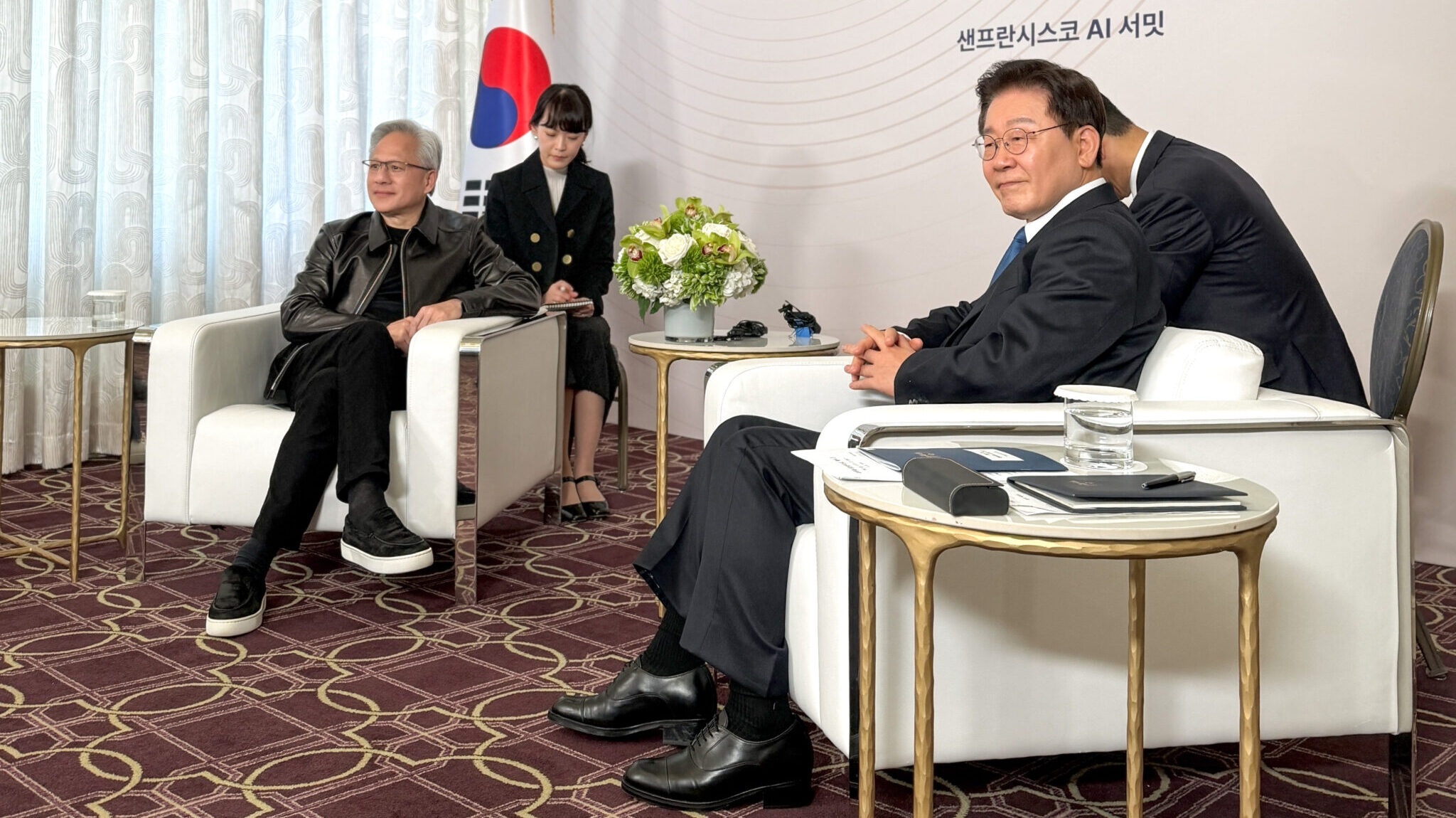
李总统在 AI 峰会前的周五于旧金山费尔蒙酒店会见了黄先生,讨论深化韩国国家 AI 计划背后的合作关系。
此次会议内容充实。李总统概述了韩国成为全球 AI 供应链关键枢纽的愿景——涵盖半导体制造、AI 基础设施部署以及产业整合。
黄先生指出,NVIDIA 与韩国已有超过 25 年的合作关系——从个人电脑游戏到 AI 革命——并承诺在 AI 基础设施、半导体、物理 AI 和研究领域深化这一合作。“从 AI 芯片和物理 AI 到 AI 基础设施,过去一年在您的领导下,韩国取得了显著成果,”黄先生表示。“这确实是韩国的黄金时代的开始。”李总统回应道:“我希望这只是一个开始。”
黄先生与这一时刻相称。回顾 25 年的合作关系,从开创韩国的游戏文化到让现代 AI 运行的存储芯片,他简明地说:“如果没有韩国发明的 HBM 存储,NVIDIA 就无法发明今天运行 AI 所用的超级计算机。”
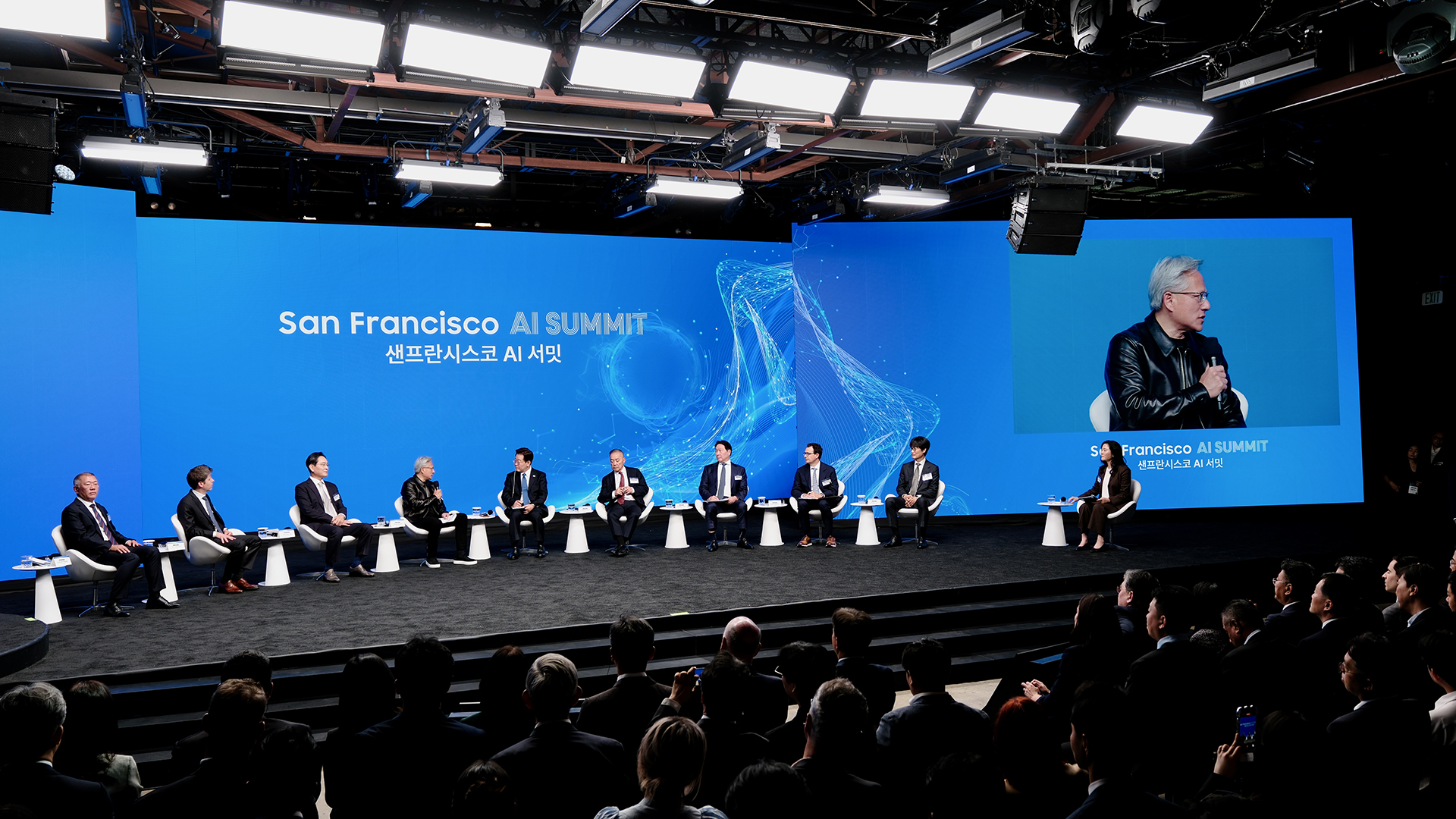
At this week’s AI Summit in San Francisco, South Korean President Jae Myung Lee and some of the country’s top business leaders and researchers are meeting with NVIDIA and ecosystem partners to chart Korea’s AI progress.
Building on NVIDIA founder and CEO Jensen Huang’s visit to Korea last month :https://blogs.nvidia.com/blog/korea-ecosystem-2026/ , this week’s discussions and announcements advance the nation’s full-stack push to expand Korea’s AI infrastructure and expertise on its path toward becoming a global center for AI innovation.
To start, NVIDIA and the Korea Advanced Institute of Science and Technology (KAIST) today announced :https://nvidianews.nvidia.com/news/nvidia-and-kaist-launch-joint-ai-research-lab-to-accelerate-ai-innovation-in-korea a joint AI research lab at the KAIST Kim Jaechul Graduate School of AI in Seoul, dedicated to advancing agentic AI for South Korea. It’s the first joint AI lab between a Korean university and any global technology company.
The collaboration will establish a robust academic AI research program, bringing together NVIDIA full-stack AI expertise, NVIDIA Nemotron :https://www.nvidia.com/en-us/ai-data-science/foundation-models/nemotron/ open models:https://www.nvidia.com/en-us/glossary/open-models/ and NVIDIA AI Cloud partner computing with the world-class scientific talent at KAIST, one of Asia’s premier research universities.
Check back here for updates as the summit continues, including Huang’s meetings with President Lee as well as Korea and U.S. business leaders.
NVIDIA and its Korea ecosystem partners — from NAVER, SK Telecom and Hyundai Motor Group to the nation’s top research universities, KAIST and Seoul National University (SNU) — are committing to developing national AI factories and physical AI :https://www.nvidia.com/en-us/glossary/generative-physical-ai/ platforms, as well as advancing joint research in agentic AI.
Core to it all: NAVER, Brookfield and NVIDIA will expand :https://nvidianews.nvidia.com/news/naver-nvidia-and-brookfield-to-expand-koreas-national-ai-factory-infrastructure-buildout NAVER’s NVIDIA DSX AI factory at its GAK Sejong data center to 200 megawatts — roughly 100,000 GPUs, built on the NVIDIA Vera Rubin platform — more than tripling the initial buildout announced in June :https://nvidianews.nvidia.com/news/naver-ai-infrastructure .
Plus, SK Group and NVIDIA today announced :https://nvidianews.nvidia.com/news/sk-group-and-nvidia-expand-strategic-partnership-across-ai-factories-and-next-generation-memory plans for a $500-billion-plus comprehensive partnership to establish AI infrastructure serving the surging demand for global compute. Broadening initial plans announced in June :https://nvidianews.nvidia.com/news/sk-telecom-ai-infrastructure , the expanded collaboration will deploy NVIDIA Vera Rubin infrastructure powered by SK hynix HBM4 memory.
And Hyundai Motor Group:https://www.hyundai.com/worldwide/en/newsroom/detail/0000001238 outlined a physical AI strategy anchored by a robot reference platform developed with NVIDIA, extending a buildout with 50,000 NVIDIA Blackwell GPUs. The collaboration also includes the integration of NVIDIA DRIVE Hyperion — an autonomous vehicle development platform combining NVIDIA DRIVE AGX in-vehicle computing running on the safety-certified NVIDIA DriveOS operating system — with HMG’s vehicle platforms.
NVIDIA and KAIST’s Department of Mechanical Engineering are planning an NVIDIA AI Technology Center (NVAITC) for collaborative research, talent development and knowledge exchange in physical AI — including projects that tap into NVIDIA Nemotron :https://www.nvidia.com/en-us/ai-data-science/foundation-models/nemotron/ open models.
This is in addition to the NVIDIA-KAIST joint research lab for agentic AI :https://nvidianews.nvidia.com/news/nvidia-and-kaist-launch-joint-ai-research-lab-to-accelerate-ai-innovation-in-korea at the KAIST Kim Jaechul Graduate School of AI in Seoul — built for the Korean language and local industry, backed by a multiyear commitment to fund and train Korean researchers.
NVIDIA and Seoul National University:https://en.snu.ac.kr/snunow/snu_media/news?md=v&bbsidx=173288 are also planning an NVAITC covering AI research, talent development and education — spanning foundation models, accelerated computing, physical AI and AI for science, with potential cooperation on AI infrastructure. This will include work harnessing NVIDIA Nemotron and NVIDIA Cosmos :http://nvidia.com/en-us/ai/cosmos/ open world foundation models :https://www.nvidia.com/en-us/glossary/world-models/ .
President Lee met with Huang Friday at the Fairmont San Francisco ahead of the AI Summit to discuss deepening the partnership behind Korea’s national AI ambitions.
President Lee opened by noting he’d seen reports of Huang eating beer and fried chicken in Seoul — and that he’d hoped to join.
Huang said the enthusiasm he felt across Korea during the visit, “from the fried chicken restaurant to the Korean barbecue restaurant, was incredible. Everyone in Korea loves AI.”
The meeting was substantive. President Lee outlined South Korea’s vision to become a pivotal hub in the global AI supply chain — spanning semiconductor manufacturing, AI infrastructure deployment and industrial integration.
Huang noted that NVIDIA and Korea have been partners for over 25 years — from PC gaming to the AI revolution — and committed to deepening that partnership across AI infrastructure, semiconductors, physical AI and research. “From AI chips and physical AI to AI infrastructure, Korea has achieved remarkable results under your leadership over the past year,” Huang said. “This is truly the beginning of a golden age for Korea.” President Lee’s response: “I hope this is only the beginning.”
Huang matched the moment. Looking back over a 25-year partnership, from seeding Korea’s gaming culture to the memory chips that make modern AI run, he put it simply: “If not for the invention of HBM memory in Korea, NVIDIA wouldn’t have been able to invent the supercomputers that power AI today.
“This really is the golden age for Korea,” he added.
SK Group’s Chey Tae-won gave the room a sense of what the demand actually looks like at this scale. Every time he has dinner with Huang, Chey said, Huang tells him “more chips” … and he predicted that whatever number Huang had quoted that day, he’d ask for more the next time they met.
Altman didn’t dress it up: “There really would not have been what we have, this incredible AI revolution, without Korea.”
Amodei said Korea plays a role “throughout the stack, from semiconductors to infrastructure to an incredible concentration of talent.”
The message out of the Midway was clear. The AI era isn’t just being built in Silicon Valley. Korea is helping build it.
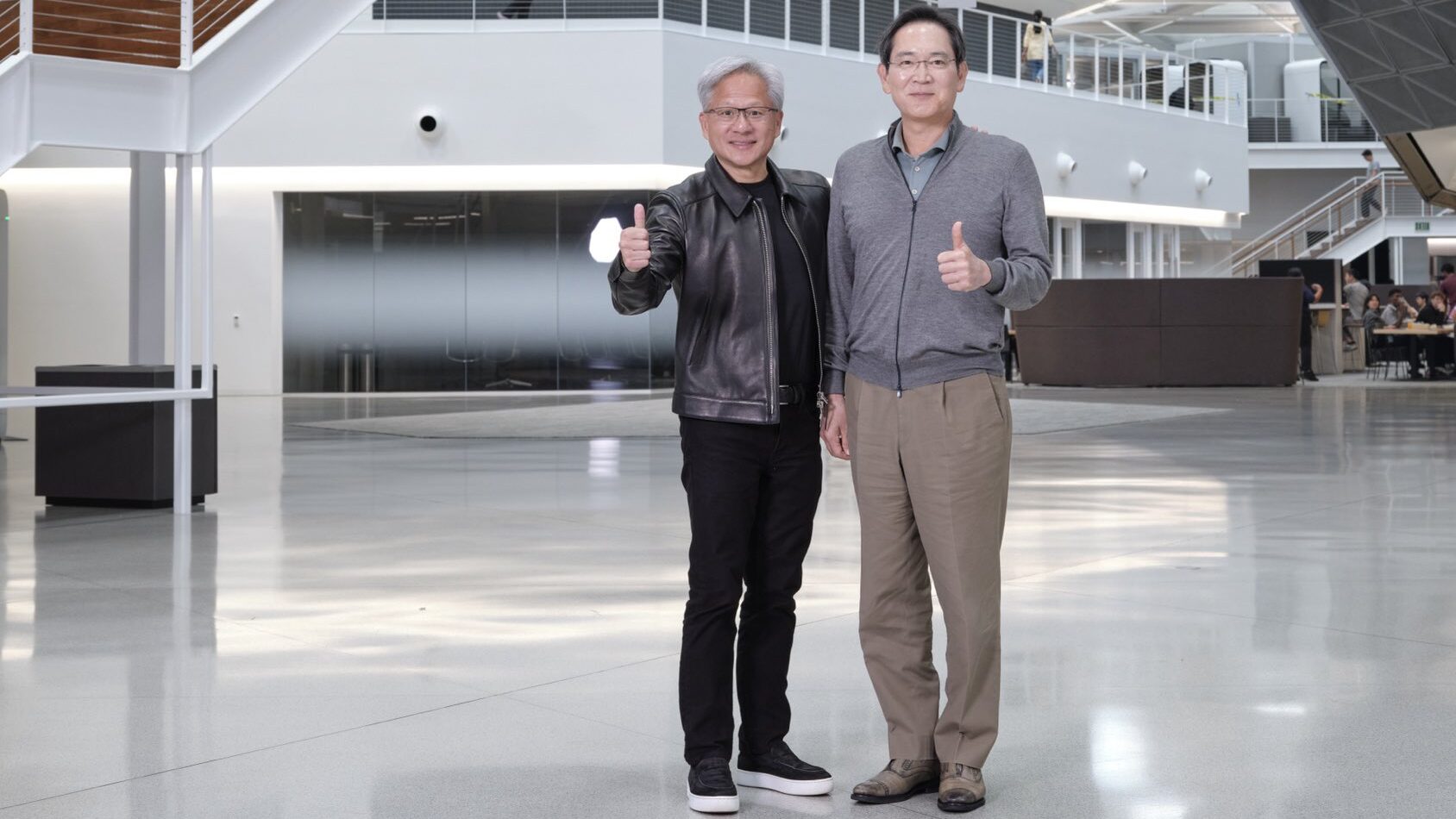
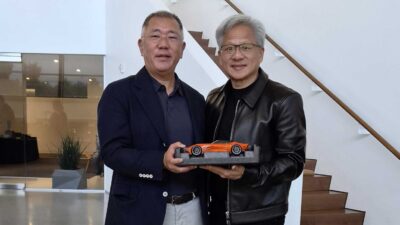
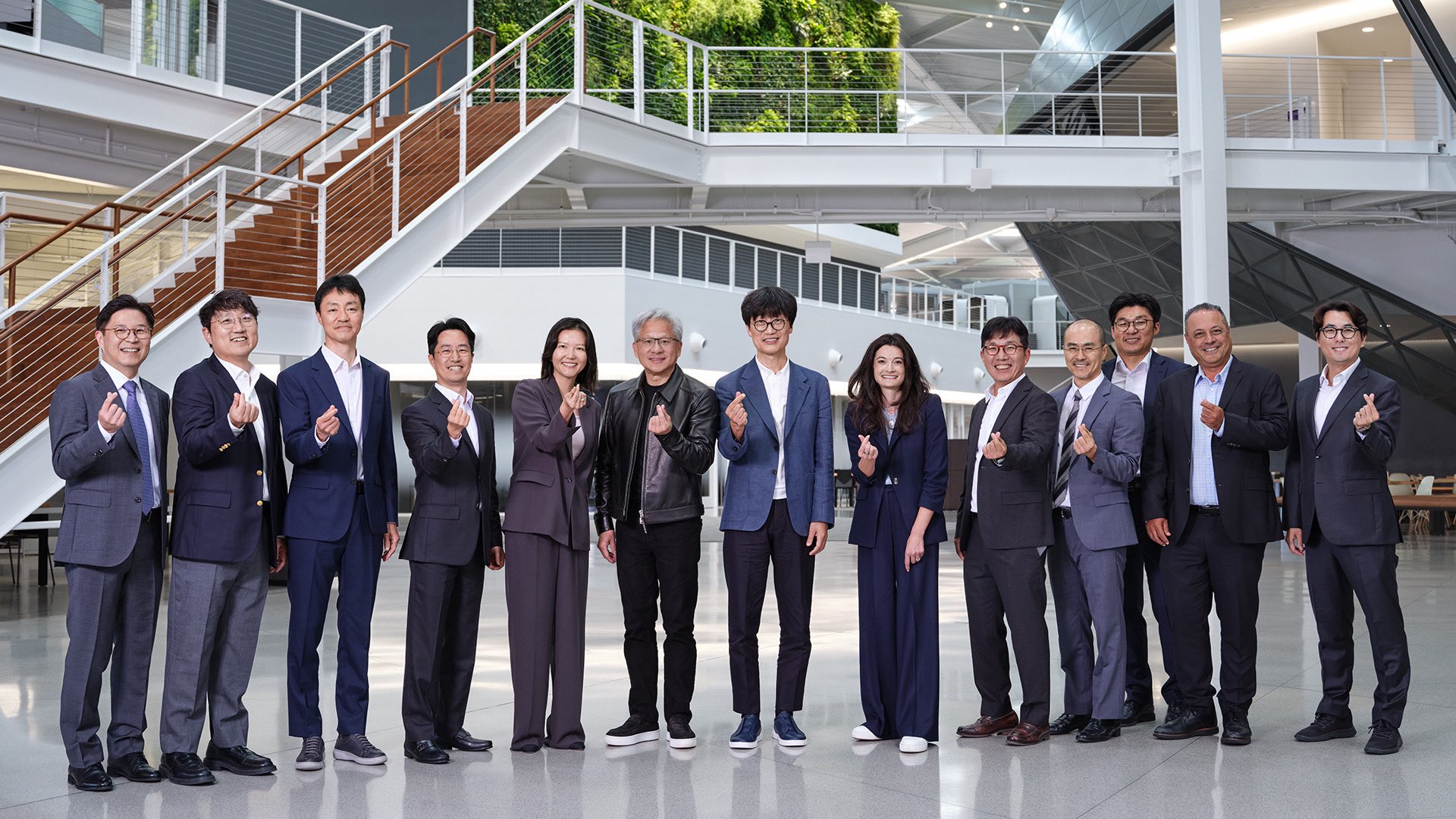
Samsung Executive Chairman Lee Jae-yong, Hyundai Motor Group Executive Chair Euisun Chung, and NAVER founder and Chairman Lee Hae-jin joined NVIDIA CEO and founder Jensen Huang on a tour of NVIDIA’s headquarters in Silicon Valley.
The Korean business leaders posed for photos with Huang in the lobby of NVIDIA’s Endeavor building — its angular design a nod to the triangles that are the building blocks of modern computer graphics — as employees worked at their desks around them.
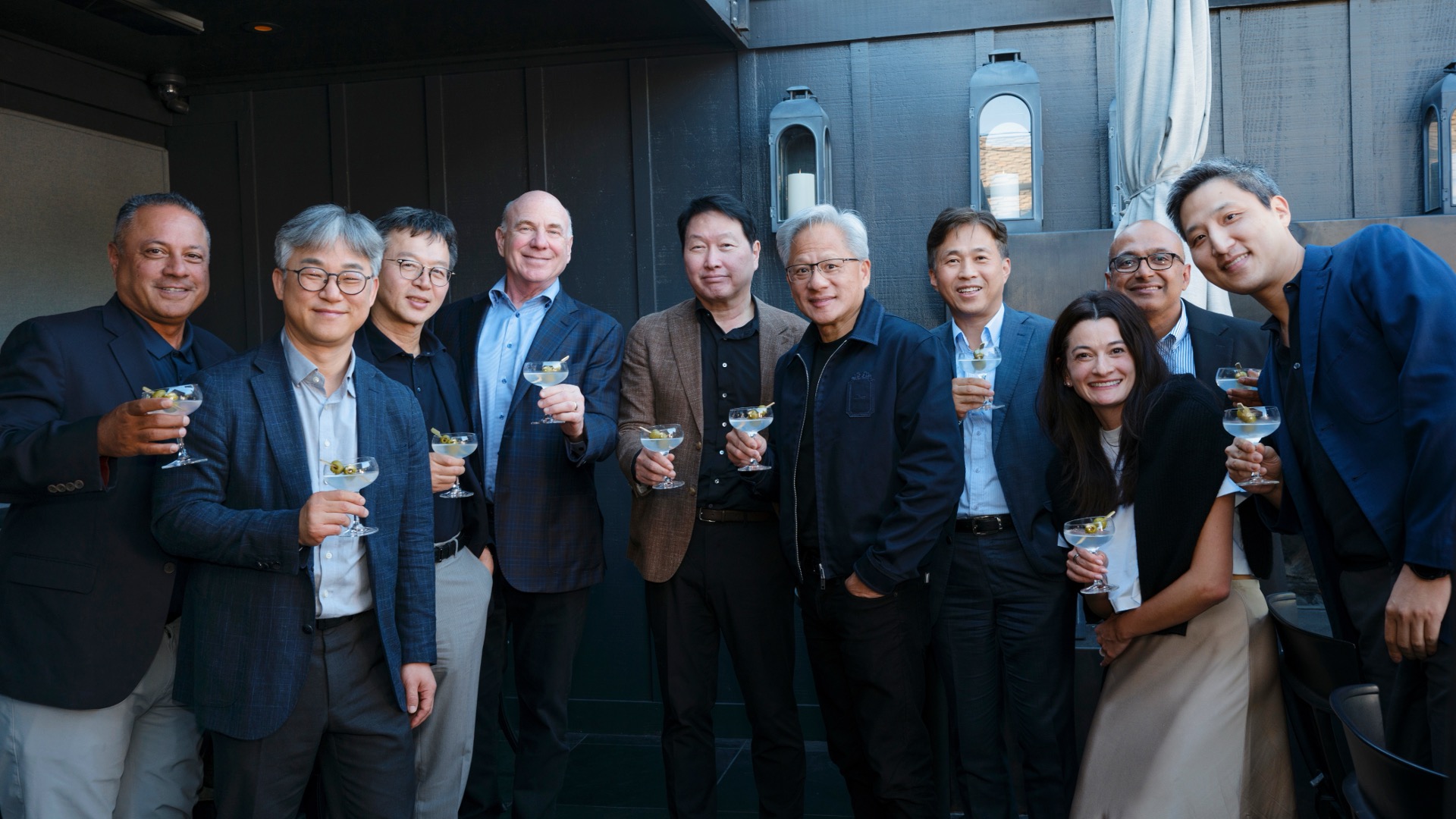
On the eve of the summit, Huang, SK Group Chairman Chey Tae-won, and the SK hynix, SK Telecom and NVIDIA teams gathered for dinner in Woodside, California. It was a warm welcome to Silicon Valley on a warm summer evening for the Korean business leaders.
NVIDIA and SK — which have had a longstanding partnership — announced in June :https://nvidianews.nvidia.com/news/sk-hynix-ai-factory an expanded collaboration to codevelop memory for NVIDIA platforms spanning AI infrastructure, personal AI and physical AI.
Also in June, SK Telecom announced plans :https://nvidianews.nvidia.com/news/sk-hynix-ai-factory to build AI infrastructure to power Korea’s innovation in physical AI, robotics and more.
Learn more about NVIDIA ’s work with Korea ecosystem partners:https://blogs.nvidia.com/blog/korea-ecosystem-2026/.
 扫码直达文章详情