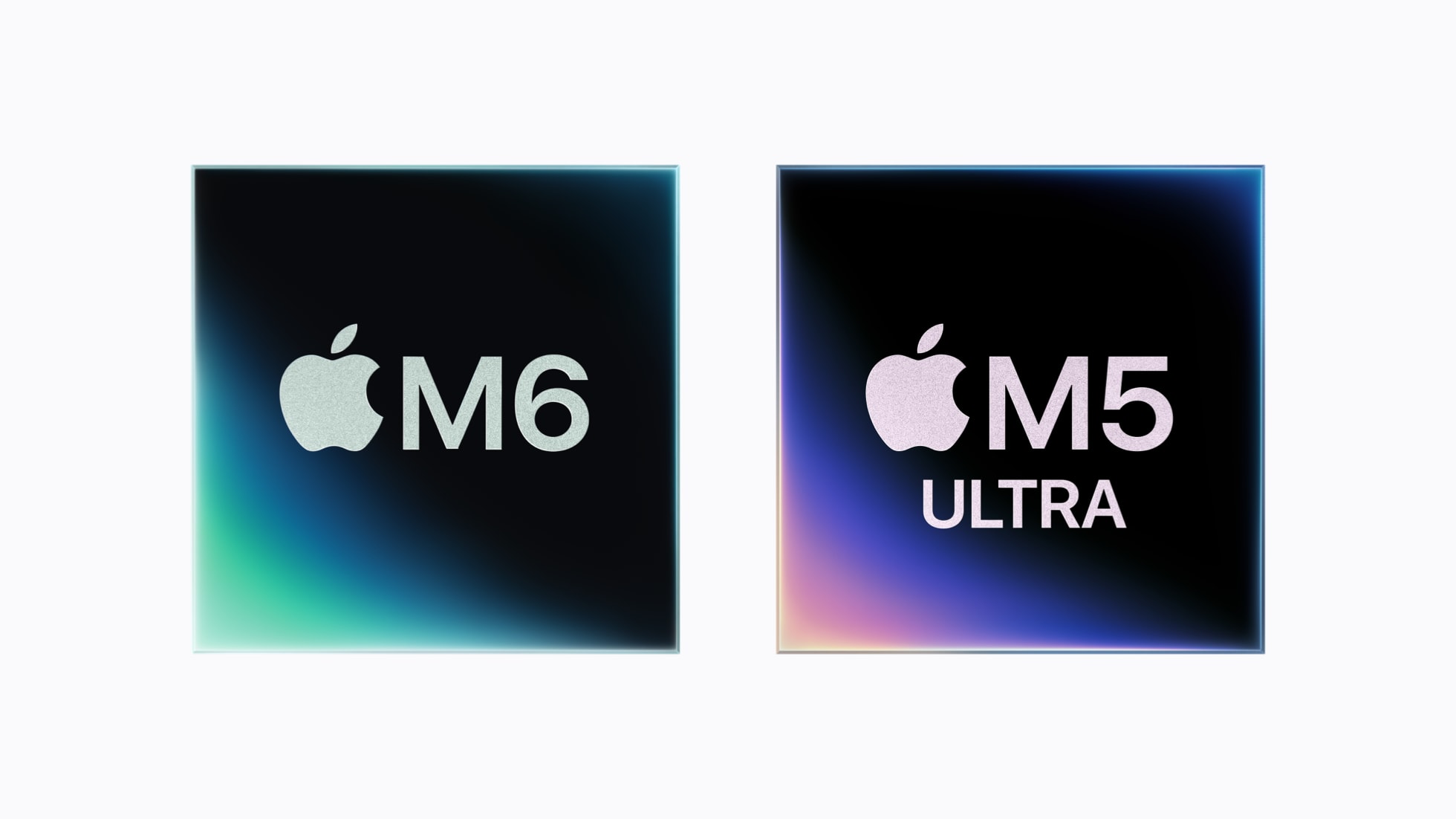
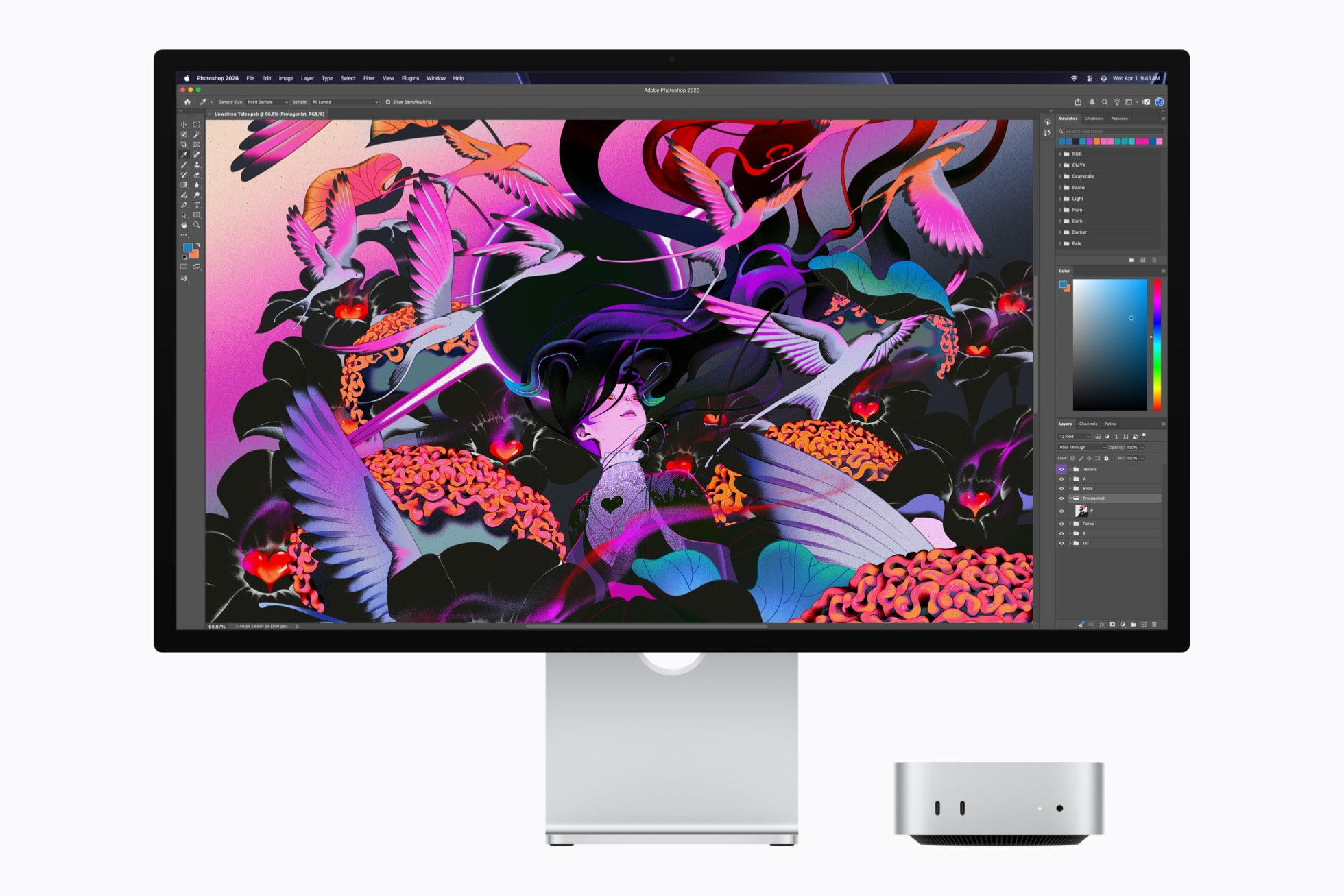
加利福尼亚州库比蒂诺 —— 苹果今天在全新 Mac mini 上发布了 M6 芯片,在全新 Mac Studio 上发布了 M5 Ultra 芯片,提供了卓越的性能和 AI 能力提升。M6 是苹果首款最先进的 2 纳米芯片,提升了每个计算模块,在各个性能维度上都实现了进步。该芯片配备了更大的 12 核 CPU 复合结构,具有全球最快的 CPU 核心;更大的 12 核 GPU 配备神经加速器;双 16 核神经网络引擎,并提供高达 170GB/s 的统一内存带宽。M5 Ultra 是面向专业和 AI 工作负载的终极性能芯片,首次在 M 系列系统级芯片(SoC)中使用下一代 UltraFusion 技术形成四芯片架构。该芯片包括最多 36 核 CPU 和最多 80 核 GPU,配备高达 1.2TB/s 的统一内存带宽,比 M3 Ultra 高 50%。凭借先进技术,这些 SoC 提供卓越计算能力和行业领先的能效,让用户在桌面端完成更多任务。
“今天,我们推出了 M6 这一令人难以置信的先进芯片,以及迄今最强大的 M 系列芯片 M5 Ultra,实现了苹果硅在性能和 AI 计算领域的下一次巨大飞跃,”苹果硅工程集团副总裁 Sri Santhanam 表示。“M6 采用尖端 2 纳米工艺打造,结合了新的 CPU 复合结构、额外的 CPU 和 GPU 核心、双 16 核神经网络引擎以及更多统一内存带宽,能够以惊人的能效处理各类工作负载。而为了实现终极桌面性能和运行巨型 AI 模型的能力,M5 Ultra 配备了超大 GPU(现带神经加速器)和更多统一内存带宽,推动桌面性能边界。”
M6:优化设计与性能提升
M6 旨在提升日常用户、学生、开发者、AI 爱好者和企业的工作流程,它在性能、能效和设备端 AI 之间提供理想平衡,让用户轻松完成日常任务、编码和创意项目。
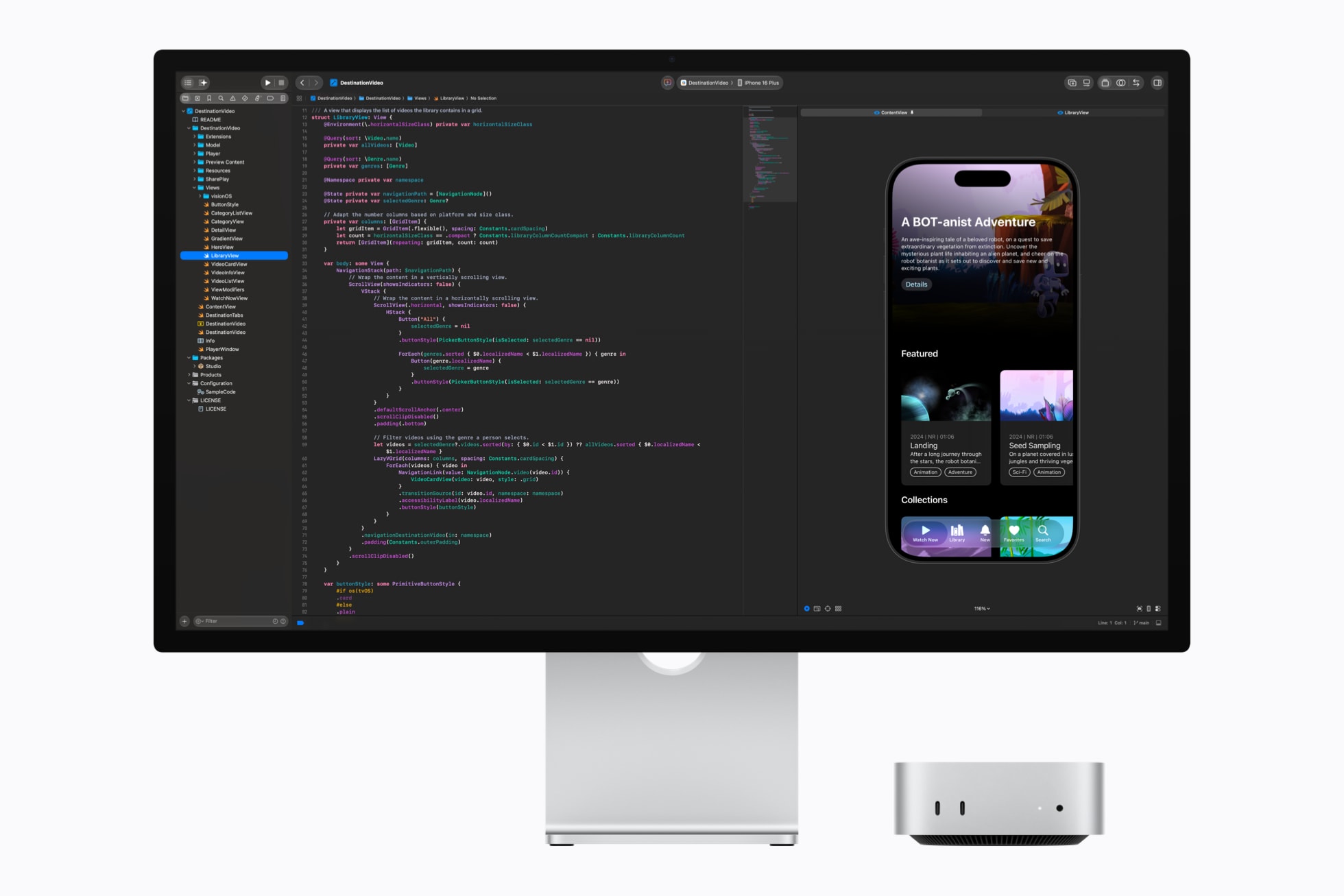
通过这些框架和新芯片,开发者可以在 Mac 上本地运行和微调大型 AI 模型。苹果的开发者工具和框架会自动优化 CPU、GPU 和神经引擎的性能,并赋予开发者使用 Apple Foundation Models、App Intents 来调用苹果智能功能,或使用他们自己的专有 AI 模型,在设备上完全构建和运行强大的 AI 工作负载的能力。
l_klug@apple.com:mailto:l_klug@apple.com
a_schubert@apple.com:mailto:a_schubert@apple.com
media.help@apple.com:mailto:media.help@apple.com
苹果于 1984 年通过推出 Macintosh 改变了个人技术领域。如今,苹果在 iPhone、iPad、Mac、AirPods、Apple Watch 和 Apple Vision Pro 等创新领域引领世界。苹果的六大软件平台——iOS、iPadOS、macOS、watchOS、visionOS 和 tvOS——为所有苹果设备提供无缝体验,并通过包括 App Store、Apple Music、Apple Pay、iCloud 和 Apple TV 在内的突破性服务赋能用户。苹果的 15 万多名员工致力于制造地球上最好的产品,并努力让世界比我们发现时更美好。
来自苹果的最新新闻和更新。
Apple introduces M6 and M5 Ultra for a big leap in performance and AI compute
M6, Apple’s first 2 nm chip, features a larger, more powerful 12-core CPU, 12-core GPU, and Dual 16-core Neural Engine, while M5 Ultra is Apple’s first quad-die architecture and its most powerful chip ever
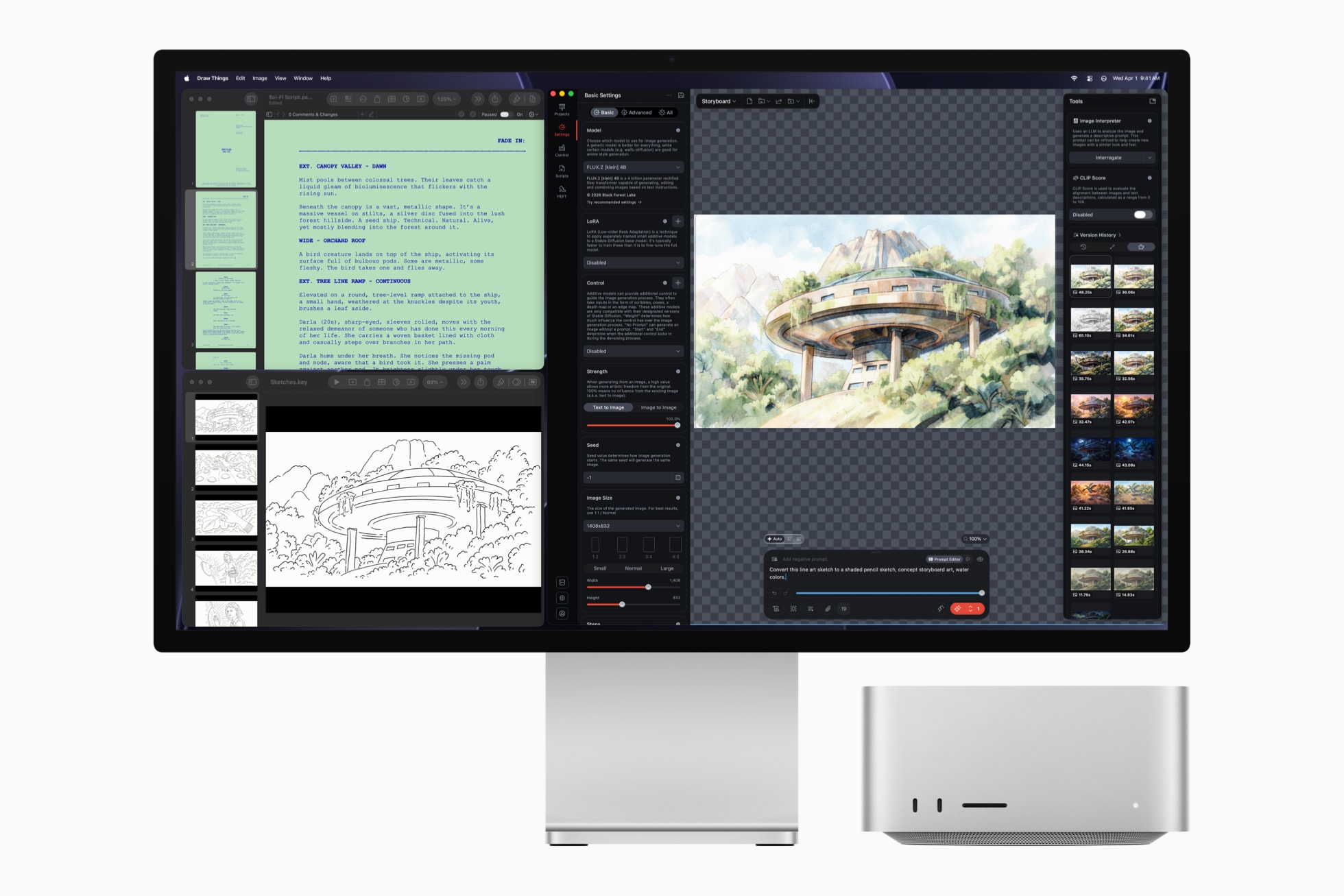
CUPERTINO, CALIFORNIA Apple today debuted M6 in the new Mac mini and M5 Ultra in the new Mac Studio, providing an extraordinary leap in performance and AI capabilities. M6, Apple’s first state-of-the-art 2-nanometer chip, advances every compute block, delivering gains across every dimension of performance. The chip features a larger 12-core CPU complex with the world’s fastest CPU core, a larger 12-core GPU with Neural Accelerators, a Dual 16-core Neural Engine, and up to 170GB/s of unified memory bandwidth. 1 M5 Ultra, the ultimate powerhouse for pro and AI workloads, uses next-generation UltraFusion technology to form a quad-die architecture for the first time in an M-series system on a chip (SoC). The chip includes an up-to-36-core CPU and up-to-80-core GPU with a massive 1.2TB/s of unified memory bandwidth, 50 percent more than M3 Ultra. With their advanced technologies, these SoCs deliver extraordinary compute with industry-leading power efficiency, empowering users to do even more on a desktop.
“Today, we’re debuting the next giant leap in performance and AI compute for Apple silicon with the incredibly advanced M6 and the most powerful M-series chip yet, M5 Ultra,” said Sri Santhanam, Apple’s vice president of Silicon Engineering Group. “Built using the cutting-edge 2 nm process, M6 combines a new CPU complex, two additional CPU and GPU cores, a Dual 16-core Neural Engine, and more unified memory bandwidth to power through workloads with amazing energy efficiency. And for the ultimate desktop performance and the ability to run massive AI models, M5 Ultra features a massive GPU, now with Neural Accelerators, and more unified memory bandwidth, pushing the boundaries of what a desktop can do.”
M6: Optimized Design and Enhanced Performance
Designed to power the workflows of everyday users, students, developers, AI hobbyists, and enterprises, M6 offers the ideal balance of performance, power efficiency, and on-device AI to effortlessly fly through daily tasks, coding, and creative projects.
M6 is built using cutting-edge 2 nm process technology, packing greater transistor density into a smaller die for a major leap in performance and power efficiency. M6 also introduces a Dual 16-core Neural Engine, providing up to 2x the peak compute over previous generations to make on-device AI workflows run even faster. System frameworks can automatically utilize both engines simultaneously, enabling applications to see faster model execution.
M6 has a brand-new 12-core CPU complex — two more cores than M5 — that consists of 2 super cores, 4 performance cores, and 6 efficiency cores. It delivers the world’s fastest single-threaded performance and up to 1.2x faster multithreaded performance as compared to M5, and up to 2.4x faster than M1. 2 The super cores blaze through single-threaded workloads, the performance cores use less power and join the super cores to run demanding multithreaded workloads, and the efficiency cores handle everyday background tasks — all with industry-leading performance per watt. As a result, demanding CPU tasks such as editing images, compiling code, indexing new files, and running agentic AI workloads are faster than ever.
Accelerated GPU and Faster Memory Bandwidth
M6 features a 12-core GPU — two more cores than M5 — with a Neural Accelerator in each core. This design delivers a nearly 30 percent increase in peak GPU compute for AI compared to M5, and more than 8x compared to M1, enabling significantly faster prompt processing when interacting with on-device LLMs. 2
In addition, M6 offers Apple’s latest advanced graphics capabilities, including updates to the shader core architecture, Dynamic Caching, and hardware-accelerated ray tracing. These technologies combine to deliver stunning visual realism, faster rendering, and higher frame rates for gaming. M6 also has 50 percent increased geometry rates for complex graphics.
M6 supports up to 32GB of unified memory to multitask across demanding apps and run LLMs on device for secure and private agentic tasks. It also provides up to 170GB/s of unified memory bandwidth — a 10 percent increase over M5 and a 2.5x increase over M1.
M5 Ultra: The Ultimate Powerhouse for Pro Workflows
M5 Ultra, Apple’s most powerful chip ever, is built for pros who need to speed through workloads that demand maximum CPU and GPU performance and unified memory bandwidth, such as complex 3D rendering, visual effects, scientific analysis, and running compute-intensive frontier AI models on device.
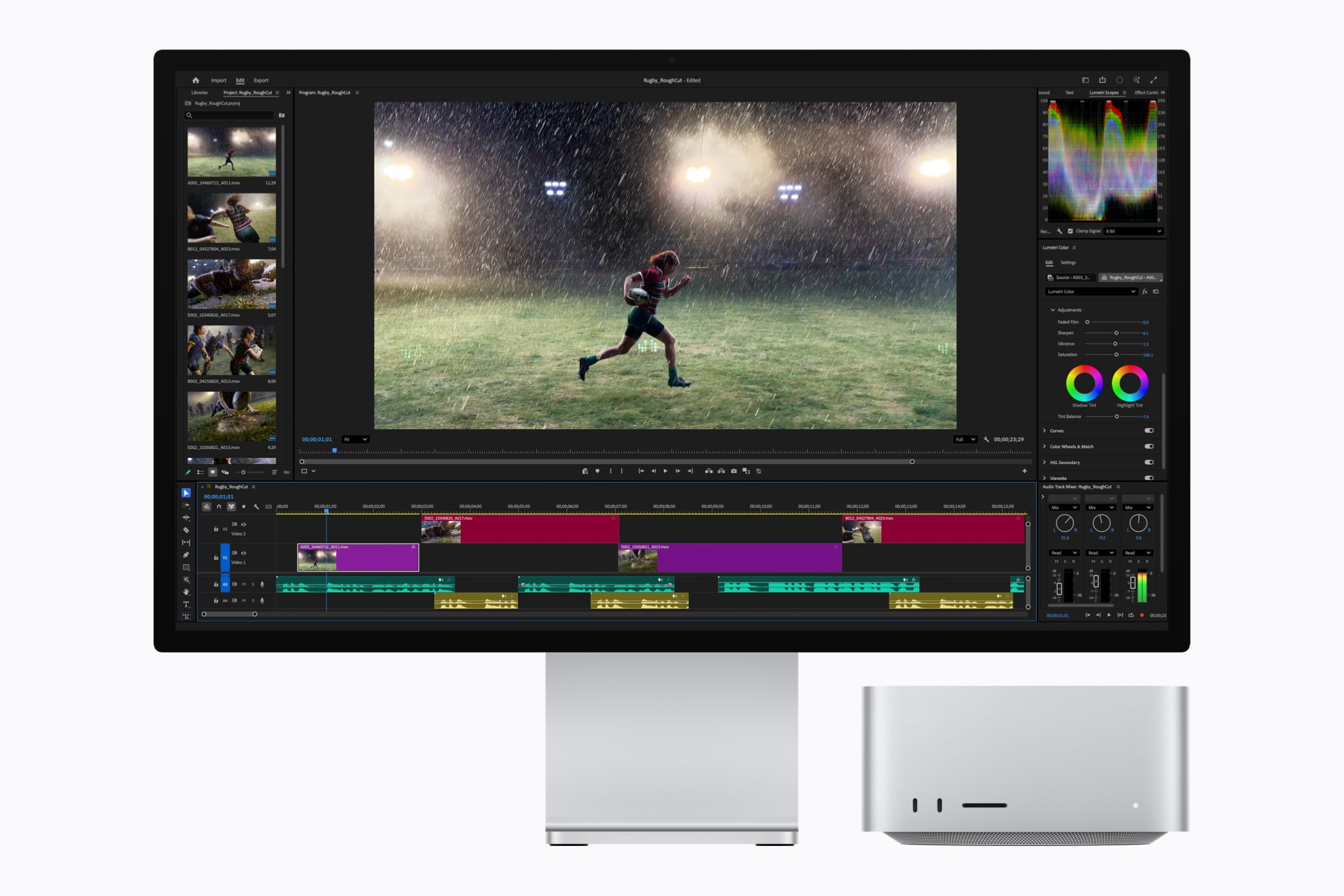
M5 Ultra uses UltraFusion to connect two dual-die M5 Max chips to form the quad-die architecture — a first for Apple silicon. UltraFusion increases the inter-die bandwidth to over 4.4TB/s and the connection density by over 6x. Together, these ultra-low-latency, high-bandwidth interconnects allow the four dies to behave as a single unified processor. M5 Ultra also features a large up-to-36-core CPU consisting of 12 super cores and 24 performance cores, delivering up to 1.25x higher single-threaded performance and up to 1.3x higher multithreaded performance than M3 Ultra. 3
Unprecedented AI and Graphics, Massive Memory Capacity
M5 Ultra features a next-generation GPU with up to 80 cores, incorporating a Neural Accelerator in each core to offer up to 4.5x the peak GPU compute for AI compared to M3 Ultra and over 6x more than M1 Ultra. 3 The GPU includes Apple’s latest shader core with second-generation Dynamic Caching, as well as hardware-accelerated mesh shading and third-generation ray tracing, delivering up to 40 percent faster graphics performance than M3 Ultra. 3
M5 Ultra incorporates a more capable Media Engine. Dedicated hardware-enabled H.264, HEVC, four ProRes encode and decode engines, and hardware-accelerated AV1 decode make it the ultimate solution for high-resolution video editing. M5 Ultra also includes a 32-core Neural Engine, driving complex AI tasks and Apple Intelligence features securely on device with industry-leading energy efficiency. 4
Additionally, M5 Ultra features a massive amount of high-bandwidth unified memory, up to 512GB, and delivers a staggering 1.2TB/s of unified memory bandwidth that is 50 percent higher than M3 Ultra. This lets users store huge datasets entirely in local memory, increase the tokens-per-second speed, and run huge LLMs with hundreds of billions of parameters entirely on device.
Apple’s developer frameworks and tools — including Core AI, Core ML, Metal, and Xcode — tap directly into the advanced hardware of both chips. Developers can leverage the Dual 16-core Neural Engine in M6, and the Neural Accelerators in the GPU with the massive 512GB unified memory pool and faster 1.2TB/s of unified memory bandwidth in M5 Ultra, to provide incredible AI compute capabilities.
With these frameworks and new chips, developers can run and fine-tune large AI models locally on their Mac. Apple’s developer tools and frameworks automatically optimize performance across the CPU, GPU, and Neural Engine, and give developers the ability to use Apple Foundation Models, App Intents to tap into Apple Intelligence features, or their own proprietary AI models to build and run powerful AI workloads entirely on device.
l_klug@apple.com:mailto:l_klug@apple.com
a_schubert@apple.com:mailto:a_schubert@apple.com
media.help@apple.com:mailto:media.help@apple.com
Apple revolutionized personal technology with the introduction of the Macintosh in 1984. Today, Apple leads the world in innovation with iPhone, iPad, Mac, AirPods, Apple Watch, and Apple Vision Pro. Apple’s six software platforms — iOS, iPadOS, macOS, watchOS, visionOS, and tvOS — provide seamless experiences across all Apple devices and empower people with breakthrough services including the App Store, Apple Music, Apple Pay, iCloud, and Apple TV. Apple’s more than 150,000 employees are dedicated to making the best products on earth and to leaving the world better than we found it.
The latest news and updates, direct from Apple.
情报判断
Aioga 编辑摘要
Apple 同时推出 M6 与 M5 Ultra,前者采用首款 2nm 工艺并用于新款 Mac mini,后者采用四芯片封装并用于新款 Mac Studio,重点强化 CPU、GPU、神经引擎与统一内存带宽。
两款芯片的规格显示,Apple 正同时推进桌面设备的能效、通用计算和本地 AI 能力。对于代码编译、图像编辑及运行较大 AI 模型等场景,性能与带宽变化可能值得关注,但实际体验仍取决于具体设备和应用适配。 后续值得关注新款 Mac mini 与 Mac Studio 的具体配置、售价、上市安排,以及应用能否充分调用 M6 的双神经引擎和 M5 Ultra 的 GPU、统一内存带宽。当前材料未说明这些产品细节,不能据此延伸判断用户规模或市场表现。


 扫码直达文章详情