语言模型通常包含文化和政治价值观,因为其训练数据过度代表某些观点,或可以通过刻意的数据选择进行塑形。研究人员警告,反复暴露于统一的 AI 输出:https://the-decoder.com/study-warns-ai-could-homogenize-human-creativity-as-models-converge-on-artificial-hivemind/ 可能会影响数十亿用户的思维方式和表达方式。
在美国,也存在将 AI 模型沿意识形态路线塑造的政治努力:https://the-decoder.com/trump-advisors-are-pushing-a-regulation-targeting-what-they-call-woke-ai-models-in-the-tech-sector/。埃隆·马斯克多次修改其 Grok AI,使其产生偏右回答:https://the-decoder.com/elon-musk-blames-user-prompts-for-groks-wave-of-anti-semitic-posts-and-hitler-praise/。研究表明,模型往往偏左,可能是因为其回答更多依赖科学证据。对于欧盟来说,除非欧洲模型在性能上能竞争并获得更广泛的采纳,否则只能在两种外国价值体系之间做选择。
保持对 AI 的了解。清晰、有用,无冗余。
关注 The Decoder 获取 AI 新闻、背景故事和专家分析。
解码器:https://the-decoder.com/
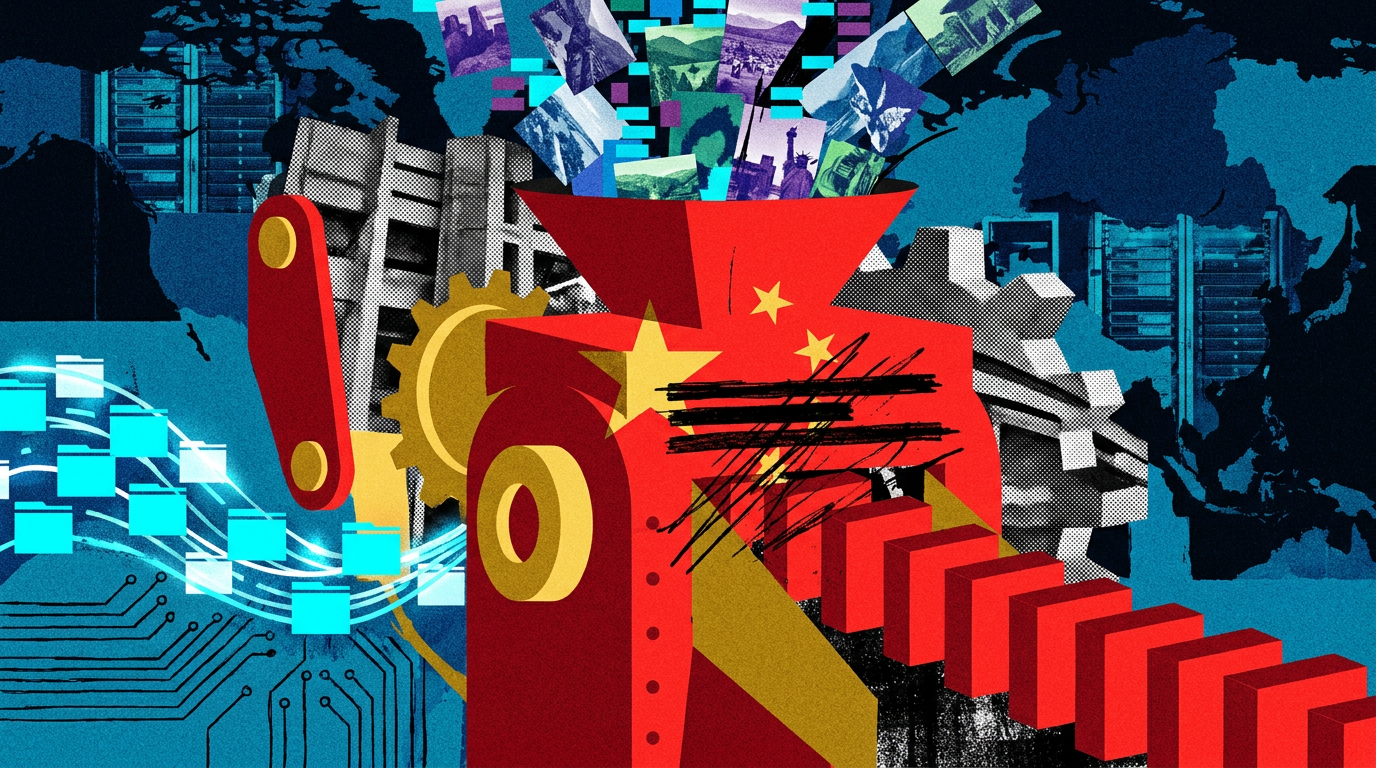
Chinese AI models frequently toe the party line when asked politically sensitive questions, according to a study by Aleph Alpha.
The company markets itself alongside Cohere:https://the-decoder.com/cohere-takes-over-aleph-alpha-shortly-after-the-german-startup-ousted-its-original-founder/?cmpscreencustom=1 as a provider of "sovereign AI" for governments, giving it a commercial interest in distinguishing its models from Chinese competitors.
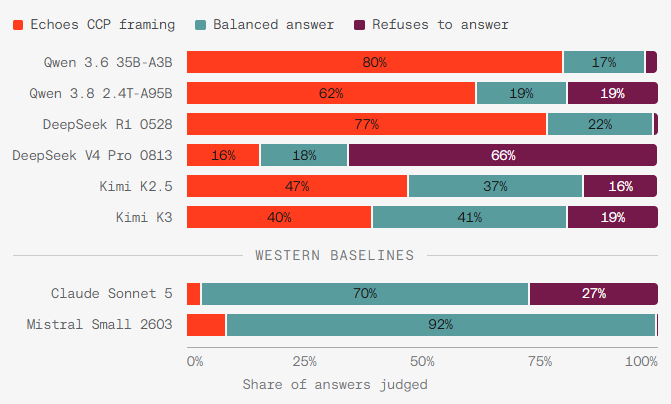
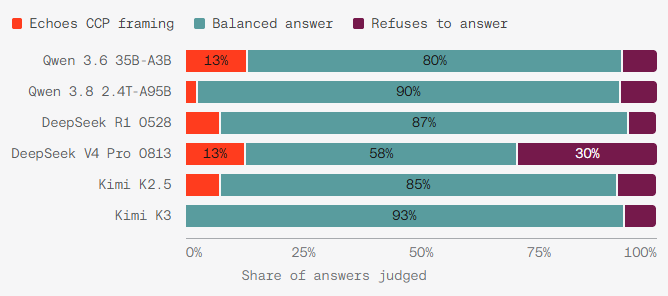
In a benchmark Aleph Alpha developed:https://aleph-alpha.com/en/blog/training-on-the-party-line/, the company tested models from Alibaba (Qwen), DeepSeek, and Moonshot AI (Kimi). The test covered 967 hand-picked taboo topics:https://the-decoder.com/deepseeks-v3-is-the-latest-example-of-state-controlled-censorship-in-chinese-llms/?cmpscreencustom=1 like Tiananmen, Taiwan, and Xinjiang. The company's own AI scoring system rated only 17 to 41 percent of responses as balanced. The rest repeated state doctrine, deflected, or refused to answer:https://the-decoder.com/china-exports-state-propaganda-with-low-cost-open-source-ai-models/. Ad
The findings line up with China's AI regulations, which require "socialist core values:https://the-decoder.com/china-orders-ai-companies-to-align-their-models-with-socialist-values/" in public-facing models. They also match recurring anecdotal reports:https://the-decoder.com/chinese-ebook-reader-boox-ditches-gpt-for-state-censored-china-llm-pushing-propaganda/ and earlier audits. Ad
The pro-China slant can also appear in answers to questions that don't mention China. When asked about censorship in the United States, Qwen 3.6:https://the-decoder.com/qwen3-6-27b-beats-much-larger-predecessor-on-most-coding-benchmarks/?cmpscreencustom=1 starts with a seemingly balanced answer. It then closes with a defense of China's stance on global internet governance. "Many countries, including China, also manage information to ensure social stability and national security," the response reads.
An earlier study by the Central European Institute of Asian Studies (CEIAS):https://ceias.eu/chinese-llms-and-the-spillover-effects-of-political-alignment/ also found this spillover effect. When terms like human rights, opposition, or surveillance came up, the models often responded with standard Beijing talking points. These included the "principle of non-interference in internal affairs" and a "community with a shared future for mankind." Ad
Aleph Alpha also takes aim at a direct competitor. Nvidia's Nemotron Cascade 2:https://arxiv.org/abs/2603.19220 showed party-line patterns in 17 percent of responses. Aleph Alpha attributes this to roughly 3,500 of its 9.3 million training examples, which were generated using DeepSeek and Qwen.
When asked to draft a speech supporting recognition of Taiwan, the model refused and instead produced a patriotic response defending Beijing's One-China principle. Nvidia is increasingly pushing its own models into the government and enterprise market, where Aleph Alpha and Cohere also want to compete. Ad
Language models generally carry cultural and political values because their training data overrepresents certain viewpoints or can be shaped through deliberate data selection. Researchers warn that repeated exposure to uniform AI outputs:https://the-decoder.com/study-warns-ai-could-homogenize-human-creativity-as-models-converge-on-artificial-hivemind/ could influence how billions of users think and express themselves. Ad
There are also political efforts to shape AI models along ideological lines:https://the-decoder.com/trump-advisors-are-pushing-a-regulation-targeting-what-they-call-woke-ai-models-in-the-tech-sector/ in the United States. Elon Musk has repeatedly had his Grok AI modified to produce right-leaning responses:https://the-decoder.com/elon-musk-blames-user-prompts-for-groks-wave-of-anti-semitic-posts-and-hitler-praise/. Studies nevertheless suggest that models tend to lean left, possibly because their answers draw more heavily on scientific evidence. For the EU, that leaves a choice between two foreign value systems unless European models can compete on performance and win broader adoption.
Stay in the loop on AI. Clear, useful, no fluff.
Follow The Decoder for AI news, background stories and expert analyses.

 扫码直达文章详情