我们正在做一些事情。概念分镜图已经改变了我们在整合营销传播(IMC)活动中获得领导层批准的方式。我们最近使用 Runway 为一则 John Cena 的广告以及一则包含 Larry Bird 和 Cooper Flagg 的 NBA 活动制作分镜图,审批速度明显加快,因为领导层可以逐场景看到我们的创意。这个应用案例非常重要。
我不断在寻找使用 AI 的新机会,重新思考我们所做的一切。从使用我们品牌指南和视觉识别制作品牌照片生成器等基础工作,到大规模付费媒体调整尺寸,再到在不同格式间智能适配布局——不仅仅是拉伸图像然后算完成。
更大的转变是文化上的。每次一个团队用 AI 做了什么并展示出来,另外三个团队就想做同样的事情。我们正处在这样一个阶段,人们开始看到实际的可能性,并根据自己的需求去应用它。
Shayla Love is Executive Producer at Chime:https://www.chime.com/, overseeing creative production and advertising for the financial services company with over 10M members. Chime has been producing campaigns focused on member testimonials for years, but wanted create them more efficiently. In this conversation, Love walks through the brand’s latest national campaign, which featured nearly 100 real Chime members, and details how the team used Runway to bring it to life for a fraction of the time and cost.
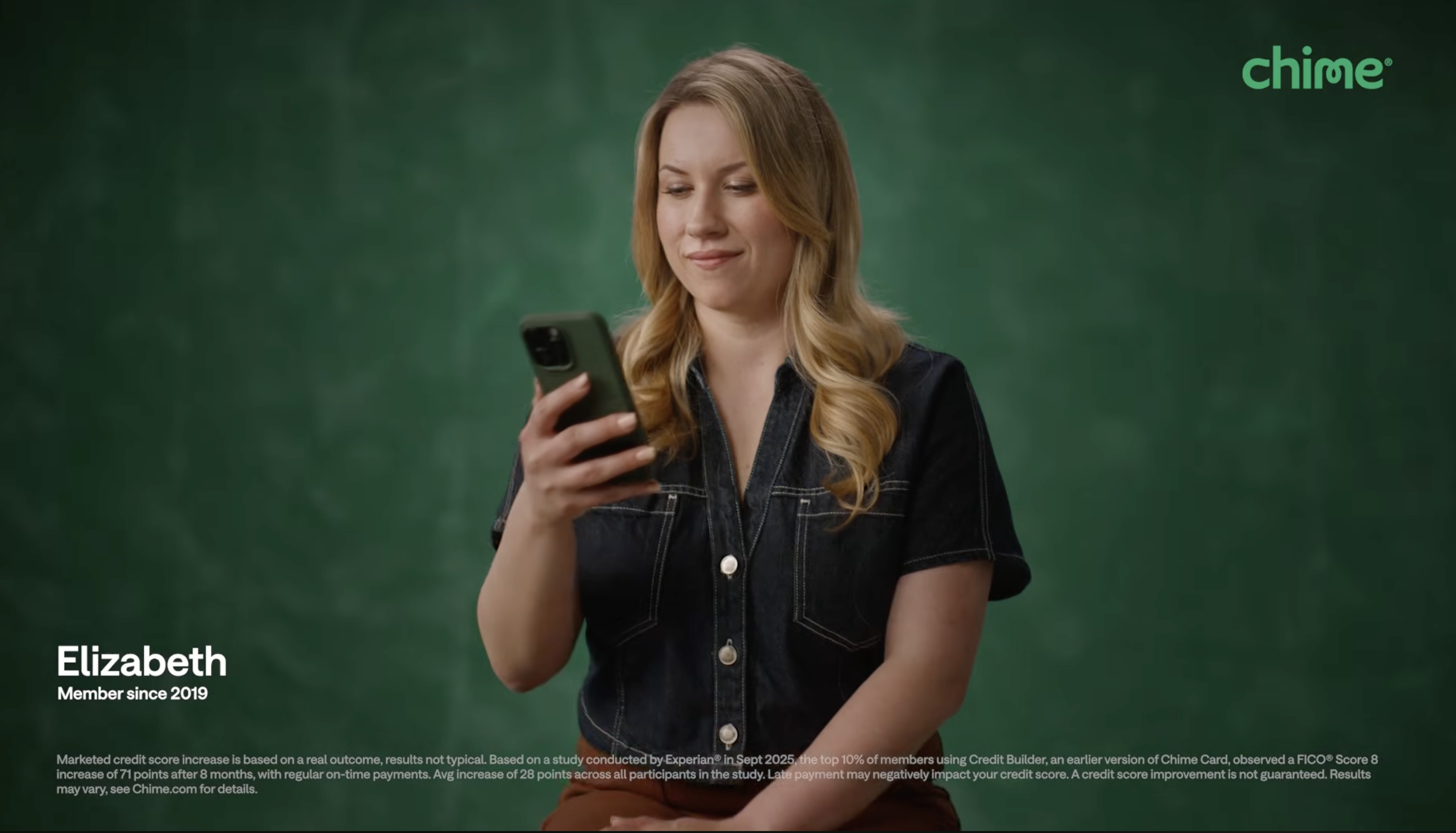
We've been shooting these testimonial spots for about four years. They're hard-hitting, performance-driven television commercial (TVC) spots featuring real members (paid for their testimonials), produced in a studio setting.
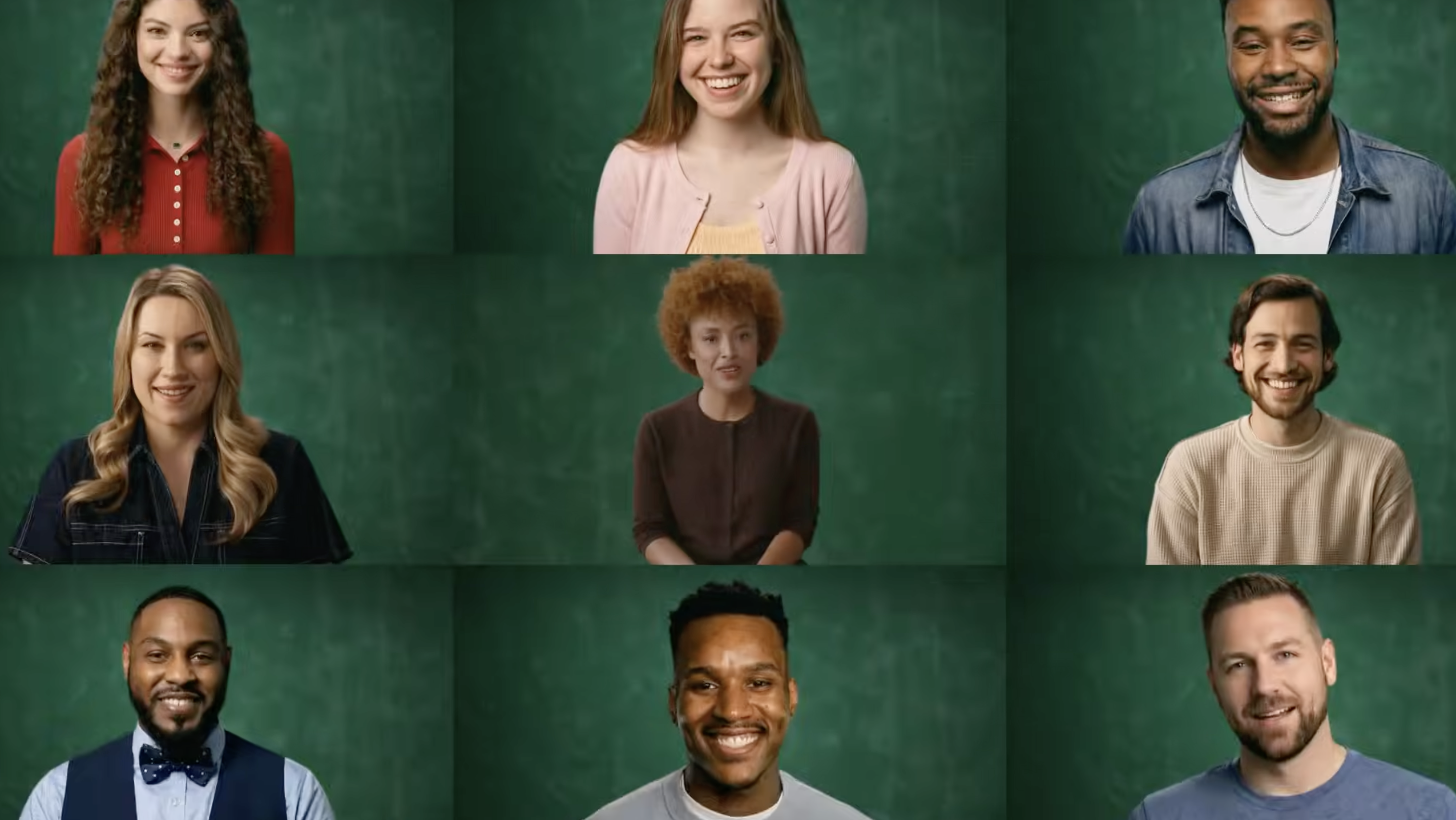
The AI unlock was in the end card. We wanted to show a large group of real Chime members in a kind of “Brady Bunch”-style grid. Leadership saw the concept and said, “great, but let’s expand this massively and show not just nine people but 100.” So I emailed more than 100 members, and asked each of them to send three photos and sign a release in exchange for a fee. I requested professional photos, a neutral wardrobe and clean backgrounds where possible. What came back was a mass of photos, wildly varying in quality and composition. Some of them I genuinely thought there was no way we'd be able to work with. But with Runway, it was amazingly simple.
Runway helped us build the initial workflow, partnering closely with their forward deployed team. They basically gave us training wheels to get started. Once I had it, I started rendering each member myself, tweaking prompts and adjusting things until we had the right outputs. It was not long before I felt confident handling all the renders myself and then eventually, teaching my team how it worked.
We processed over 85 members through that workflow. The output is a still photo brought into motion: stable, TV-ready and consistent despite wildly inconsistent source material (UGC photos). The end card animates with all of them in the grid. It became this showcase of real members, at a scale that would have been extremely difficult and costly to execute with a traditional shoot.
Honestly, it started with the Runway team partnering so closely with us. That first workflow they built for us, just showing us what was possible, was the nudge we needed to move past "what can AI actually do" and into "here's something we're actually doing."
The technology matters, but because it is advancing so fast, what's been key for us is having a partner who knows how to implement the tech in real creative ideas.
I did the math. Getting even this partial approach done — 80-plus members, with the quality and volume we needed — would have cost around $300,000 the traditional way. That includes travel, studio time, crew, hair, wardrobe and production overhead. Aligning schedules for real people all over the country for the same date, logistically, would have been unrealistic to attempt. We simply would not have pitched or produced this scene practically.
With Runway, that same end card — real members, TV-quality, broadcast-ready — came in under $30,000, paid directly to our member talent with virtually no production overhead.
We're working on a few things. Concept storyboards have already changed how we get leadership approvals on integrated marketing communications (IMC) campaigns. We recently used Runway to storyboard a John Cena spot and an NBA campaign featuring Larry Bird and Cooper Flagg, and the approvals moved so much faster because leadership could see our ideas scene by scene. That use case is huge.
I am constantly looking for new opportunities to use AI, rethinking everything we do. From basics like building a brand photo generator using our brand guidelines and visual identity to scaled paid media resizes to adapting layouts intelligently across formats — not just stretching an image and calling it done.
The bigger shift is cultural. Every time one team does something with AI and shows it, three other teams want to do the same thing. We're in that phase right now where people are starting to see what's actually possible and rolling with it for their needs.
Opportunities to reinvent our production approaches are everywhere. Sometimes they are obvious, some opportunities need to be figured out, and sometimes you might just need to ask what’s possible. For us, we saw an opportunity, asked if AI could solve the problem and then ran with it. Once you see it work once — really work, for TV, not just a test — you'll start seeing those moments everywhere.
Fee-free digital banking platform serving millions of everyday Americans
 扫码直达文章详情